
DESTINATION GUIDE · INDIAN OCEAN
Maldives
A thousand islands, and only one of them is yours.
Begin a conversationThe Editorial Introduction
The Maldives is not one destination. It is a country of more than a hundred resort islands, each a complete world of a single property, and the island you choose decides everything the journey becomes. Maison Emerald plans the Maldives island-first: the villa is the commodity, the island is the product.
The market sells the Maldives as a single photograph. A villa on stilts, water in three shades of blue, a price beneath it. The photograph is repeated at every level of the market until the country appears interchangeable, a matter of taste and budget rather than judgement, and that is precisely how the most bookable destination in luxury travel became the easiest to get quietly wrong.
The truth sits the other way round. Because almost every resort occupies its own island, there is no neighbourhood to wander into, no restaurant down the road, no correcting a mistake by taking a taxi somewhere better. The island is the food you will eat for a week, the reef you will swim over, the pace your children will keep, the distance you will travel to arrive. Choose it well and the Maldives becomes whatever the occasion asks of it: a honeymoon of genuine seclusion, a family’s annual ritual, a fortnight of diving or wellness or blissful nothing. Choose it from the photograph and you will holiday in the wrong world, in a beautiful room.
The villa is the commodity. The island is the product.
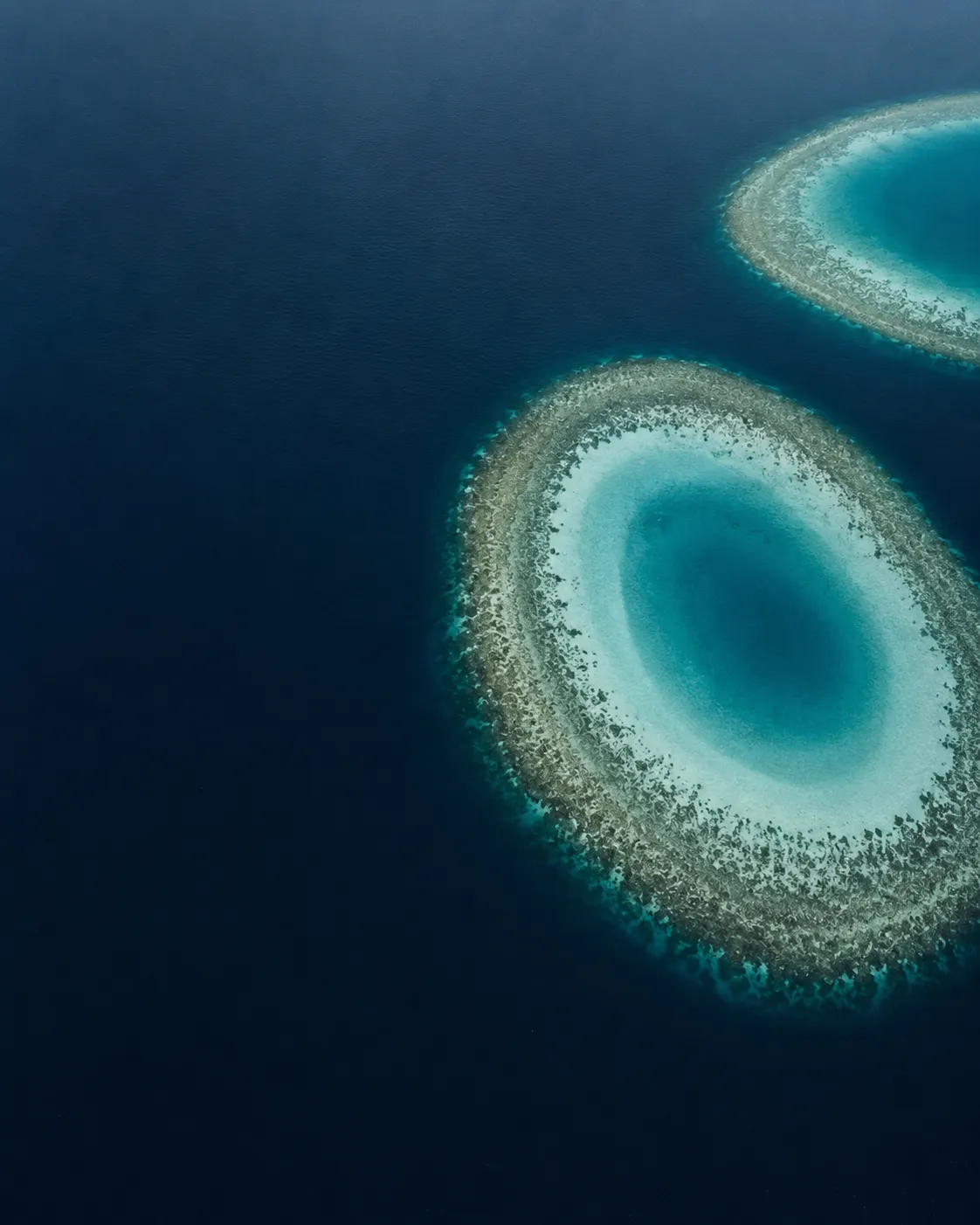
Nobody books the wrong Maldives. They book the wrong island.
How the Maldives Goes Wrong
The Maldives fails politely. Nothing collapses; the seaplane flies, the villa is beautiful, the water is exactly the colour of the photograph. The journey simply becomes a quieter version of what it should have been, and most travellers never learn why. Three mistakes account for almost all of it, and we have watched each one paid for in full.
The brand reflex.
Faced with a hundred islands they cannot tell apart, most travellers reach for a name they recognise. It is a rational instinct and it is the single most expensive shortcut in the country, because some of the finest islands in the Maldives are independent, or belong to groups so small that nobody outside the industry has heard of them. The brand buys reassurance; the reassurance costs the better island. The client who insisted on the familiar flag got precisely what the brochure promised, then spent the week watching another island across the water and asking us, on their return, what it was. What the journey lost is the hardest kind of loss to see: the trip they would have preferred, on an island they never knew existed.
The transfer error.
Every island is reached from Malé by speedboat, seaplane or a domestic flight and boat, and the choice is treated as an afterthought when it should be made alongside the island itself. The seaplane is the romance of the country, and on a shorter trip it can quietly consume the first and last days: it flies in daylight only, holds to its own schedule, and a late international arrival means a night near the airport before the crossing. The domestic route reaches the far islands but carries the most moving parts, and where possible we plan around it. The speedboat, dismissed as the unglamorous option, is very often the correct luxury: off the aircraft and onto the water within the hour, a drink on deck, arrival before the light goes. What the journey lost, when this is misjudged: a night at each end, and the first evening spent recovering instead of arriving.
The water villa assumption.
The villa on stilts is the reason half the world comes here, and it is genuinely extraordinary: the ladder into the lagoon, the water beneath the floor, the horizon from the bed. It is also, for many travellers, the wrong villa for the second week. A beach villa gives you the sand at your door, shade for the children, the short barefoot walk to everything, and on the longer stays we book, the combination, water first, beach after, is chosen by almost everyone we have ever sent twice. What the journey lost: the ease of the fortnight, traded for the photograph of the first morning.
Three mistakes, one root. Each begins with a picture of a villa, when the decision was always about an island. Which raises the harder question this guide exists to answer: in a country of a hundred islands that photograph identically, how do you actually read them?
Understanding the Maldives
The Maldives reads as a scatter of a thousand islands, and the honest way to understand it is not geographical but practical: the country organises itself around how far you are willing to travel after you land. Every journey begins at Malé, the capital and the international gateway, and Malé is transit, never a stay; the country you came for begins the moment you leave it. From there, the Maldives resolves into three working bands.
The Three Bands.
The Malé atolls.
The speedboat range. Ringing the capital, North and South Malé atolls hold some of the country’s most polished islands within thirty to fifty minutes of the airport by speedboat. This is the band of efficiency: land in the afternoon, drinks on deck as the light softens, dinner on your island the same evening. It suits the shorter trip, the long weekend from the Gulf, the honeymoon that begins the moment the aircraft door opens, and any traveller for whom the arrival should be a glass of something cold rather than a second journey. What it concedes is remoteness; these are the islands closest to the country’s one busy corner, and the seclusion, though real, is designed rather than geographic.
The seaplane belt.
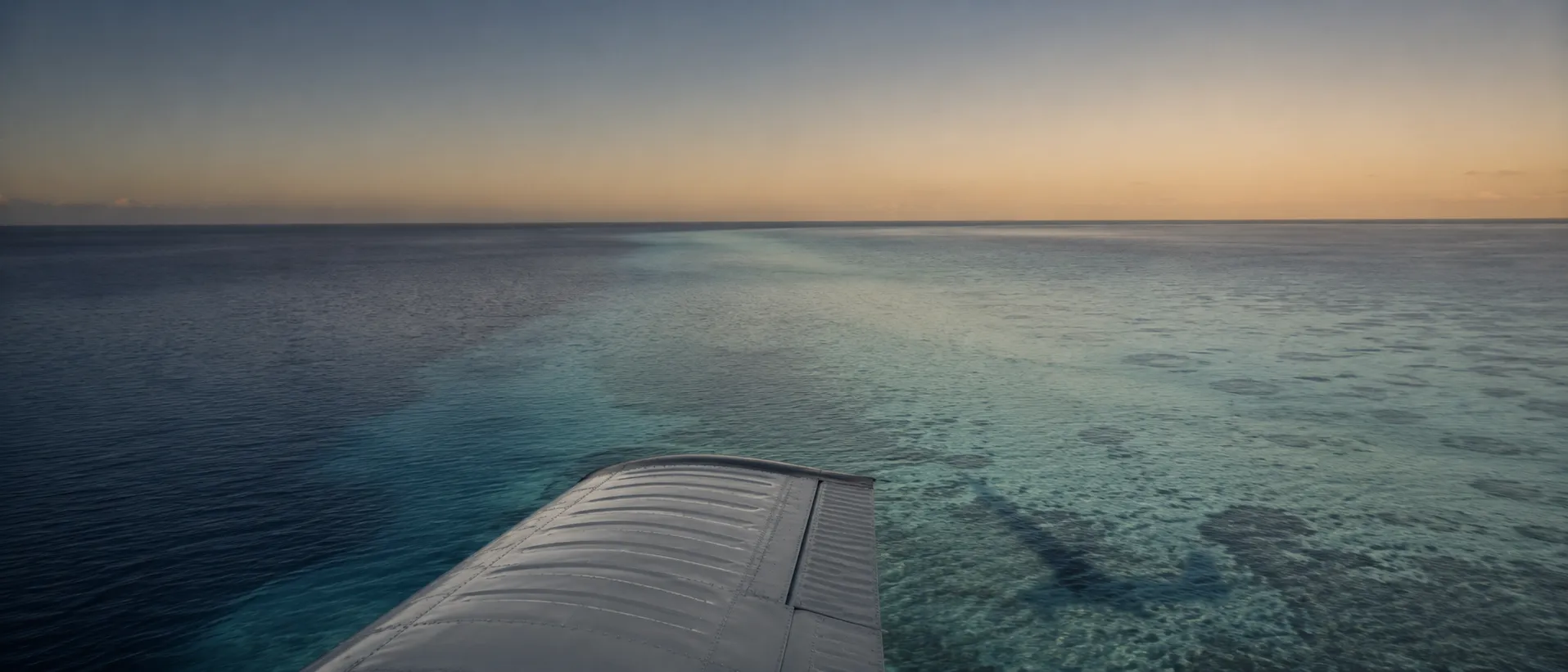
The remote middle. North and west of the capital, across Baa, Raa, Noonu and their neighbours, sits the band where most of the country’s icons were built. Here the seaplane is the connection and, on the right trip, part of the experience: twenty-five to forty-five minutes low over water that shades from navy to glass, atolls turning beneath the wing. This is the band of the true desert-island feeling, of house reefs that justify the word, and of Baa Atoll’s UNESCO Biosphere Reserve, whose season we will return to later in this guide, because it holds one of the great natural gatherings on earth. The seaplane belt asks something in return: daylight-only flying, a schedule that belongs to the operator rather than to you, and the arrival mathematics we described a movement ago. It rewards the trip long enough to absorb them.
The far reaches.
Earned by domestic flight. South and far north lie atolls reached by domestic aircraft and a boat on the other end, the deep south running down towards the equator. A handful of islands out here genuinely earn the journey, with reefs and channels that serious divers cross the world for and a remoteness that is fact rather than styling. Our judgement is unchanged from the transfer movement: this is the routing with the most moving parts, and we recommend it only where the island itself is the argument. When it is, the argument is a good one.
Two truths sit across all three bands. The first is that distance and quality are not the same axis: there are exceptional islands forty minutes from the airport and ordinary ones two flights away, and the market’s instinct that remoter means better is a version of the photograph problem wearing different clothes. The second is that the band decides the shape of your first and last days, which on a seven-night trip is a meaningful fraction of the holiday itself. The island chooses the transfer; the transfer shapes the trip; and so the reading of a hundred identical photographs begins, unglamorously, with a map and a clock.
Beyond the resort islands, the country itself stays mostly out of view, and deliberately so at the level we plan: the Maldives a private traveller experiences is the island world, visited by an occasional local-island excursion or sandbank crossing where the interest is genuine. The capital’s queues, the seaplane terminal’s waiting rooms and the mechanics of moving between worlds are exactly the places where the journey is won or lost, and they are where an advisor earns their place: through our network, the passage through Malé is met, managed and mostly invisible. How that works, and why it has become the thing our clients request before anything else, belongs to the journey-design movement ahead.
THE MAISON PERSPECTIVE
How we think about the Maldives
Every destination we plan carries a set of judgements the house holds with conviction, formed on the ground rather than from the brochures. These are ours on the Maldives, with what follows when they are ignored. We have visited more than twenty-five of these islands ourselves; we know their teams, their villa plans and their tables, and the judgements below are the residue of that time.
Island first, category second.
The market’s language, water villa, beach villa, all-inclusive, five-star, describes rooms and rates; it does not describe worlds. The occasion chooses the island, and only then does the category conversation mean anything. Reverse the order and the consequence is the one this guide opened with: a beautiful room in the wrong world, and no taxi out of it.
The independents deserve the benefit of the doubt, and rarely need it.
Global names run superb islands here, and several appear later in this guide. But the Maldives is one of the last places in luxury travel where the independent and the near-unknown routinely outclass the famous. A brand promises a standard; an island either is or is not exceptional, and the flag above it settles nothing. The consequence of the brand reflex is paid in silence: the traveller never learns what the unfamiliar name across the water would have given them, so the mistake feels like a success and is repeated annually.
Nowhere is the advisor’s case more visible than here.
In most destinations our value is judgement; in the Maldives it is judgement and arithmetic at once. Online journeys tend to price the room first and reveal the rest late: the taxes and service layered at checkout, the transfer, often priced like a second flight because it is one, appearing after the decision is made. Rates built through our network arrive the other way, composed whole, transfers and recognition included, alongside villa positions and touches no rate page can carry. The consequence of booking the photograph online is the rare inversion the industry does not advertise: paying more for a thinner version of the same island.
All-inclusive is due its rehabilitation.
In the luxury segment the phrase carries a stigma it no longer deserves, and in the Maldives it deserves it least of all. Alcohol is expensive on every island in the country without exception, the cost of paradise’s logistics, and the standard of cooking across the top islands is genuinely outstanding, which removes the old suspicion that inclusive means indifferent. On the right island the inclusive basis is not a compromise but the island’s whole idea: Kudadoo, where everything is simply part of the stay, is among the finest expressions of it in the country. The consequence of dismissing the board basis on connotation alone is real money spent proving a point nobody was arguing.
There is no bad month. There are wrong expectations.
The Maldives is sold on a good half and a bad half of the year, and we have watched that fiction cost clients the trip that would have suited them best. The drier months earn their reputation; the green months carry rain in passing showers rather than lost days, water still warm as a bath, islands at their quietest and their most generously priced. The consequence of believing the binary runs in both directions: the traveller who refuses May pays peak rates for crowds they did not want, and the one promised guaranteed sunshine in February learns that weather signs nothing, anywhere, ever.
Five judgements, one thread. The Maldives rewards travellers who decide on substance, island, season, basis, and punishes the ones who decide on image, brand, photograph, connotation. The punishment is gentle, which is exactly why it works so well.
The photograph is what the Maldives looks like. The island is what it is.
Choosing Experiences
The photograph promises a beach, and if a beach is all you want, no country on earth does it better. But the Maldives repays intent. Decide what the week is actually for, and the island can be chosen to serve it, which is the whole art. These are the intents we plan around most, and the judgement each one demands.
Diving, and the question of the house reef.
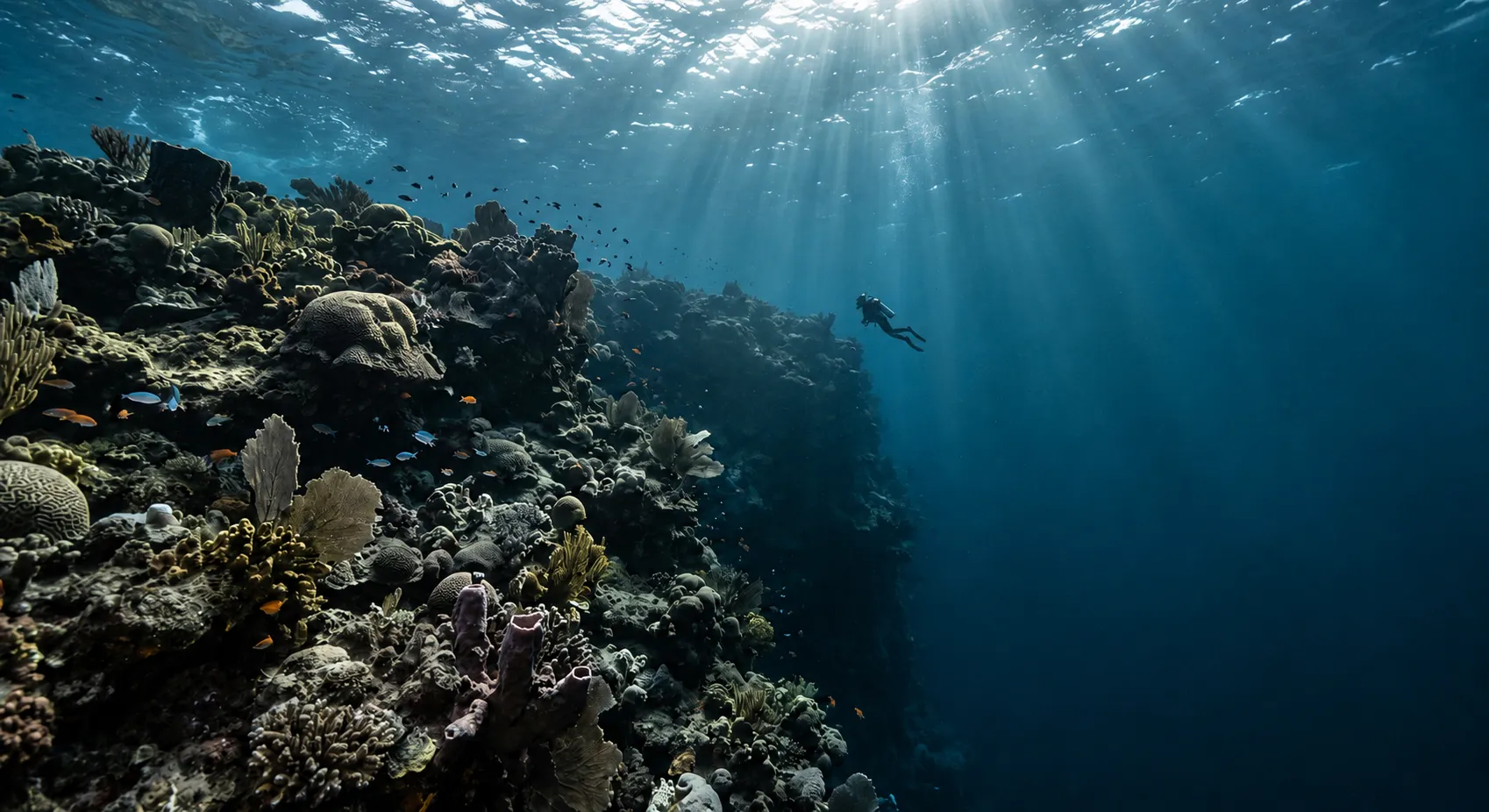
For divers and snorkellers the single most important sentence in this guide is this one: the reef belongs to the island, and no amount of villa can compensate for a poor one. Some islands sit on channels and drop-offs that rank with the world’s great diving; others, equally beautiful above the waterline, offer a house reef in name only, and everything worth seeing is a boat ride away. If the water is the point of the trip, reef quality outranks villa category, dining and brand in that order, and it is the first question we put to the island, not the last. The far southern atolls, for the committed, hold channel diving that justifies every one of the moving parts it takes to reach them.
The water as playground.
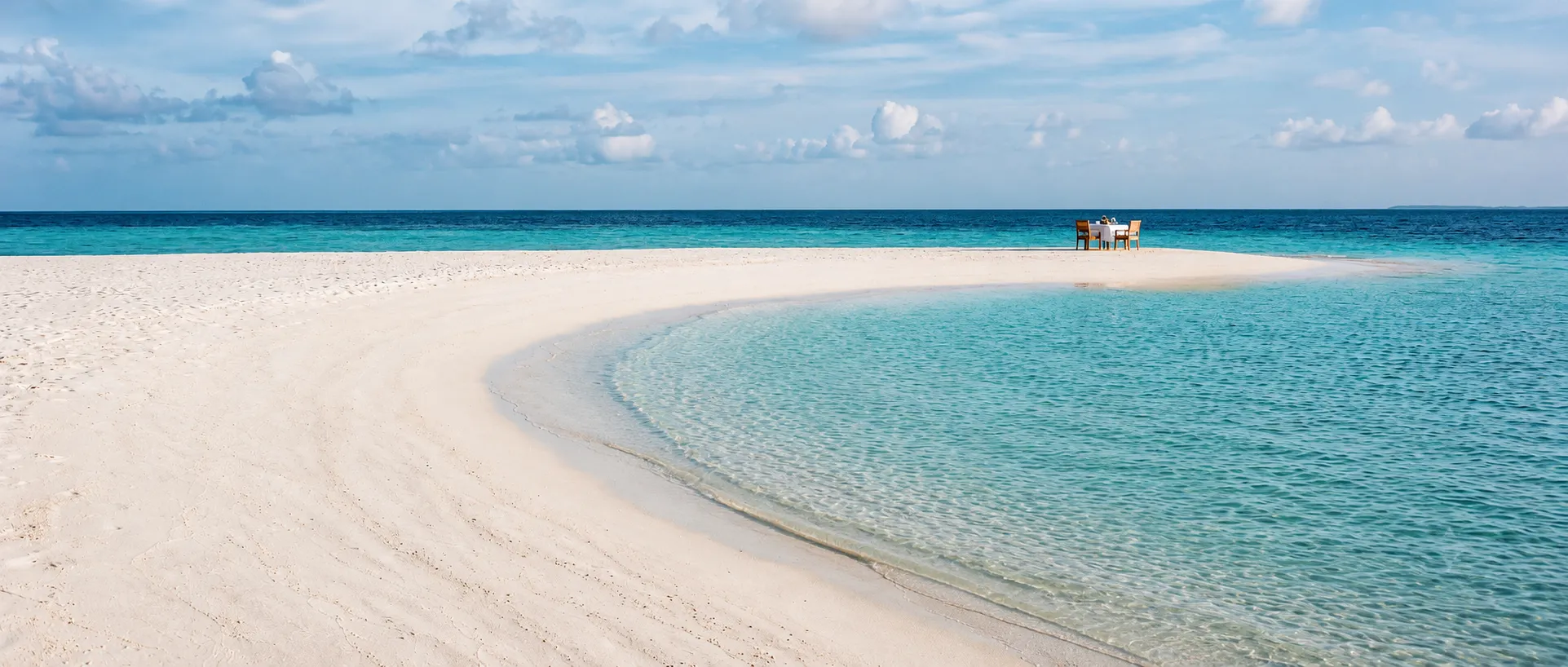
Sailing at sunset, seabobs and wings and everything the toy shed holds, a sandbank crossing with lunch set on a spit of white that will not exist at the next tide. The judgement here is about scale: the liveliest islands run watersports centres of real ambition, while the quietest treat motorised anything as noise. Neither is wrong; a honeymoon and a teenage family simply want opposite ends of that spectrum, and both occasionally believe they want the same island until we walk them through a week on it.
Wellness as the destination, not the amenity.
Every island has a spa; a few islands are the spa. At the far end of that spectrum the Maldives now offers something genuinely rare: the island designed entirely around wellbeing, where the programme, the table and the architecture are one continuous intention, and the beach is the setting rather than the point. Joali Being is the country’s clearest statement of it. The judgement: a wellness island is transformative for the traveller who wants transformation, and quietly frustrating for the one who wanted a resort with a very good spa. Be honest about which you are; we will be.
The family week.
Said plainly: the kids’ clubs on the best family islands here are among the finest in world hospitality, whole villages of them, staffed and programmed to a standard that turns a parents’ holiday and a children’s holiday into the same trip. The judgement is in the details the photograph never shows: the club’s age bands and whether your children actually fall inside them, babysitting for the dinner that runs late, dietary handling done properly rather than promised, the speedboat that suits small children better than a seaplane’s waiting rooms, and the meet and greet through Malé that keeps the whole arrival calm. Families who get these details right return every year; it is the origin of most of the annual rituals we look after in this country.
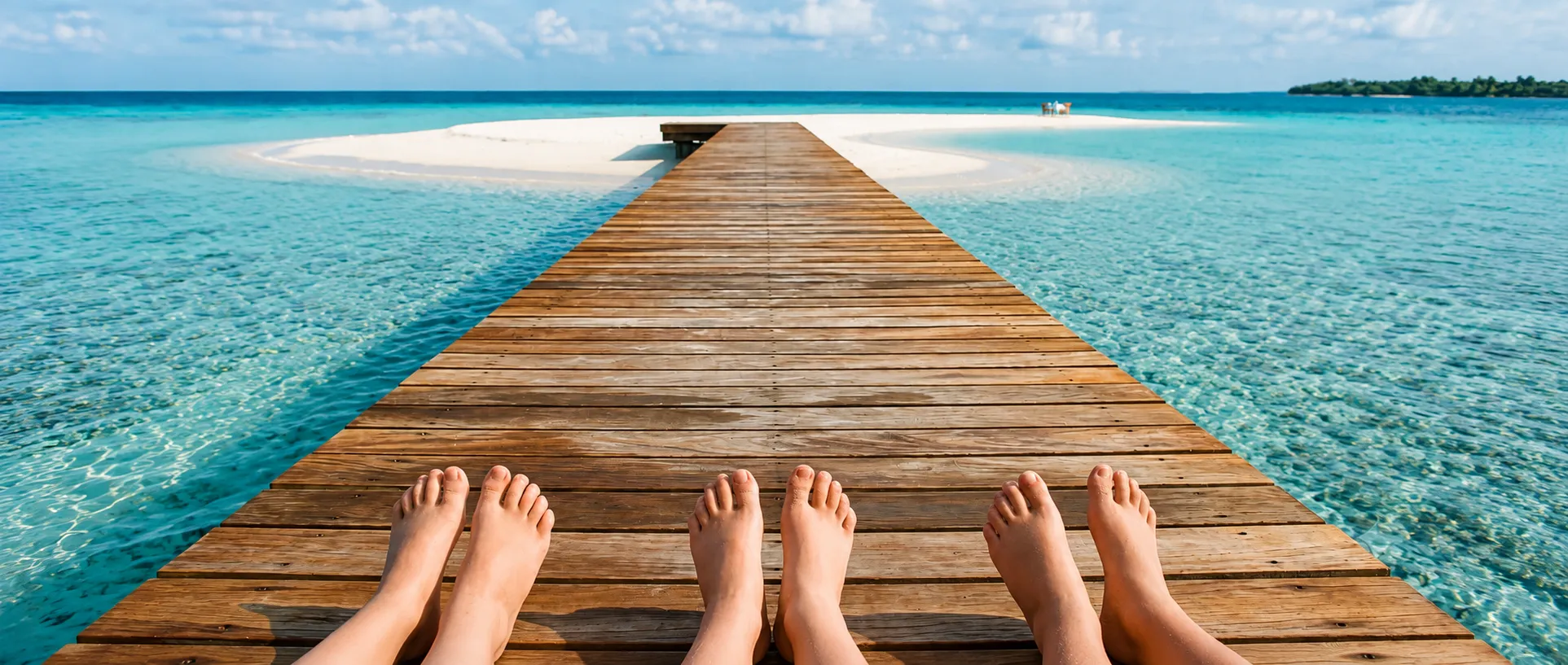
Four intents, and the same discipline underneath each: name what the week is for before anyone opens a brochure. The island will either serve the intent or it will not, and everything in the next movement, transfers, villas, the shape of the stay, follows from that answer.
Designing the Journey
A Maldives journey is designed backwards. The occasion chooses the island; the island dictates the transfer; the transfer shapes the first and last days; and the days that remain decide the villa strategy and the length. Run that sequence in order and the trip assembles itself. Run it in reverse, villa first, island last, and you are booking the photograph again. This is how we compose it.
The transfer, decided with the island and never after it.
The rule from the country’s three bands, stated as practice: speedboat for efficiency, seaplane for the remote, domestic only where the island earns it. On a four-or-five-night trip, protect the hours; the speedboat islands give you the extra evening that a seaplane schedule quietly takes. On the longer trip, the seaplane is not a cost but a chapter, the country’s one unmissable view, and it belongs to journeys with the slack to enjoy it. Private seaplane charter exists for those who want the belt on their own clock; it is priced accordingly, and for the right trip it is worth every part of it. Where the far reaches call, we route the domestic legs with the schedule padding they demand and are honest that no amount of planning removes every variable.
The arrival, choreographed.
Malé airport is an international gateway compressed onto a small island: queues at immigration, a terminal crossing, and for seaplane travellers a second wait in a lounge that is not the one you flew in. This half-day is where the journey is most often lost, and it is the half-day we manage hardest. Through our network we arrange VIP meet and greet on arrival: met at the aircraft, escorted through immigration, luggage handled, delivered to the boat or the lounge with the queues happening to somebody else. It has become the request our clients make before any other; those who have arrived this way once ask for it at the first quote thereafter, and we now consider it part of the journey rather than an addition to it. The same choreography runs in reverse on departure, where it matters nearly as much.
The villa, planned across the stay rather than for the first morning.
The first-morning logic of the water villa and the second-week logic of the beach were set out earlier; here is the practice. On stays of a week or less, choose one villa and choose it for the occasion. Beyond a week, the combination is our standing recommendation, water first for the theatre, beach after for the ease, and the move itself becomes a small event in the middle of the stay. Villa position is the detail no rate page carries: sunrise or sunset side, distance from the arrival jetty, which numbers hold the widest lagoon. We have walked these islands; we ask for villas by number.
Length, and the second island.
Most islands hold a wonderful week. Past that, even paradise begins repeating itself, and the honest design is a second island rather than a longer stay on the first: a speedboat island paired with a seaplane island, the polish of one against the seclusion of the other, the transfer between them a day on the water rather than a chore. For travellers routing through the Gulf, a Dubai stopover bookends the trip naturally, city first, island after, and we build it as one journey rather than two bookings.
The ritual.
A pattern worth designing for from the first trip: clients here rarely go once. They return to the island that fit, or rotate two or three that do, the speedboat islands for the short annual escape, the seaplane belt when the diary allows the longer one. The first journey, done properly, is an audition for a standing appointment, and we plan it knowing that.
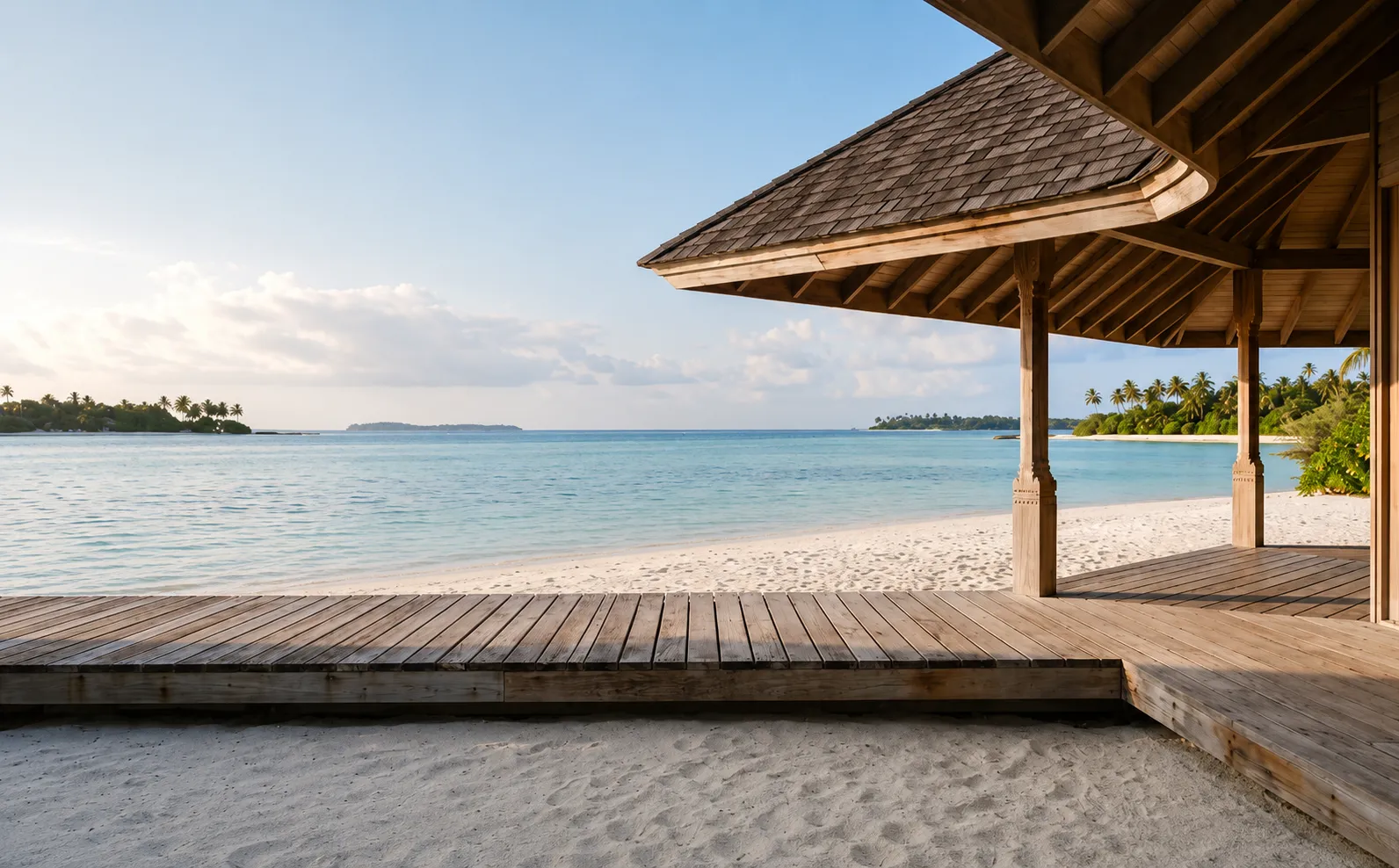
The occasion chooses the island; the island decides everything after it.
Signature Experiences
Access in the Maldives is not about doors; almost everything is open to anyone who books it. Access here is knowing which island holds the experience you are imagining, in which month, at what scale, and how the finest versions are arranged. These are the ones that define the country for us.
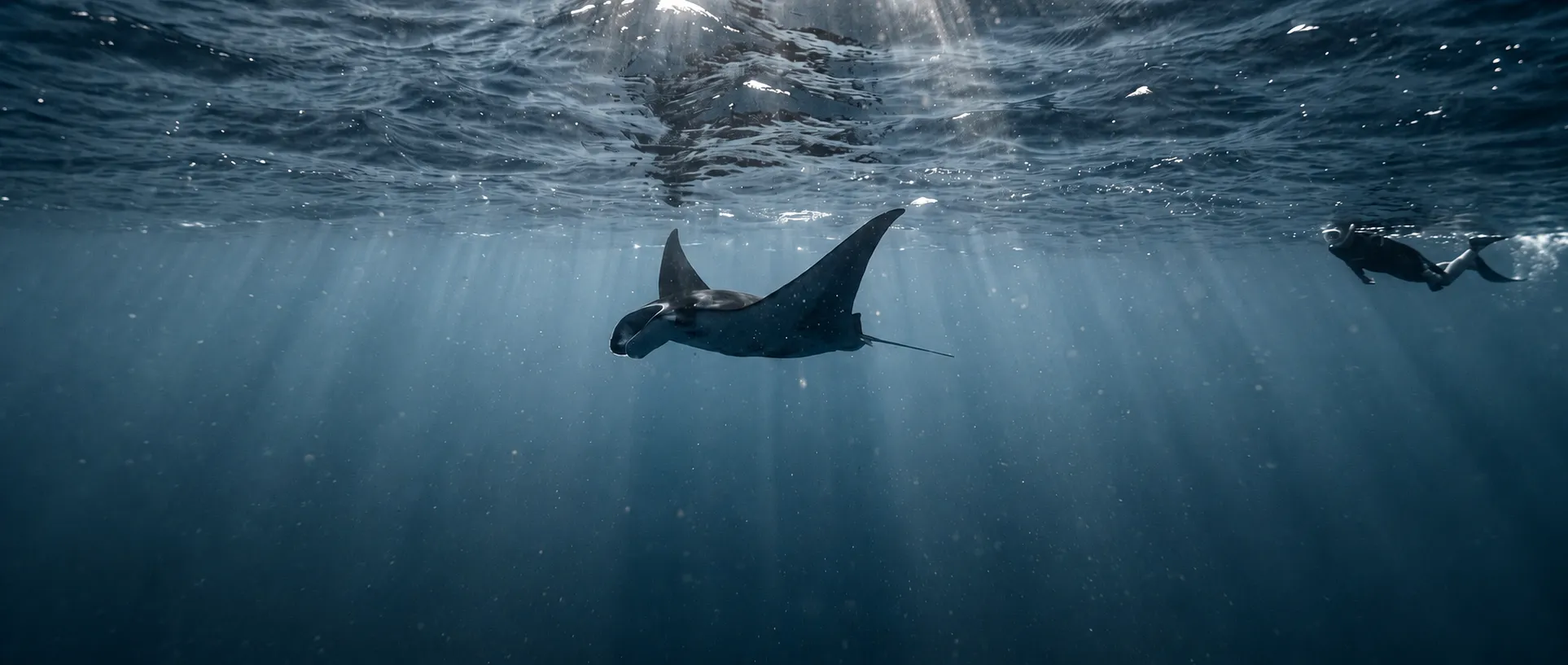
The gatherings: manta rays and whale sharks.
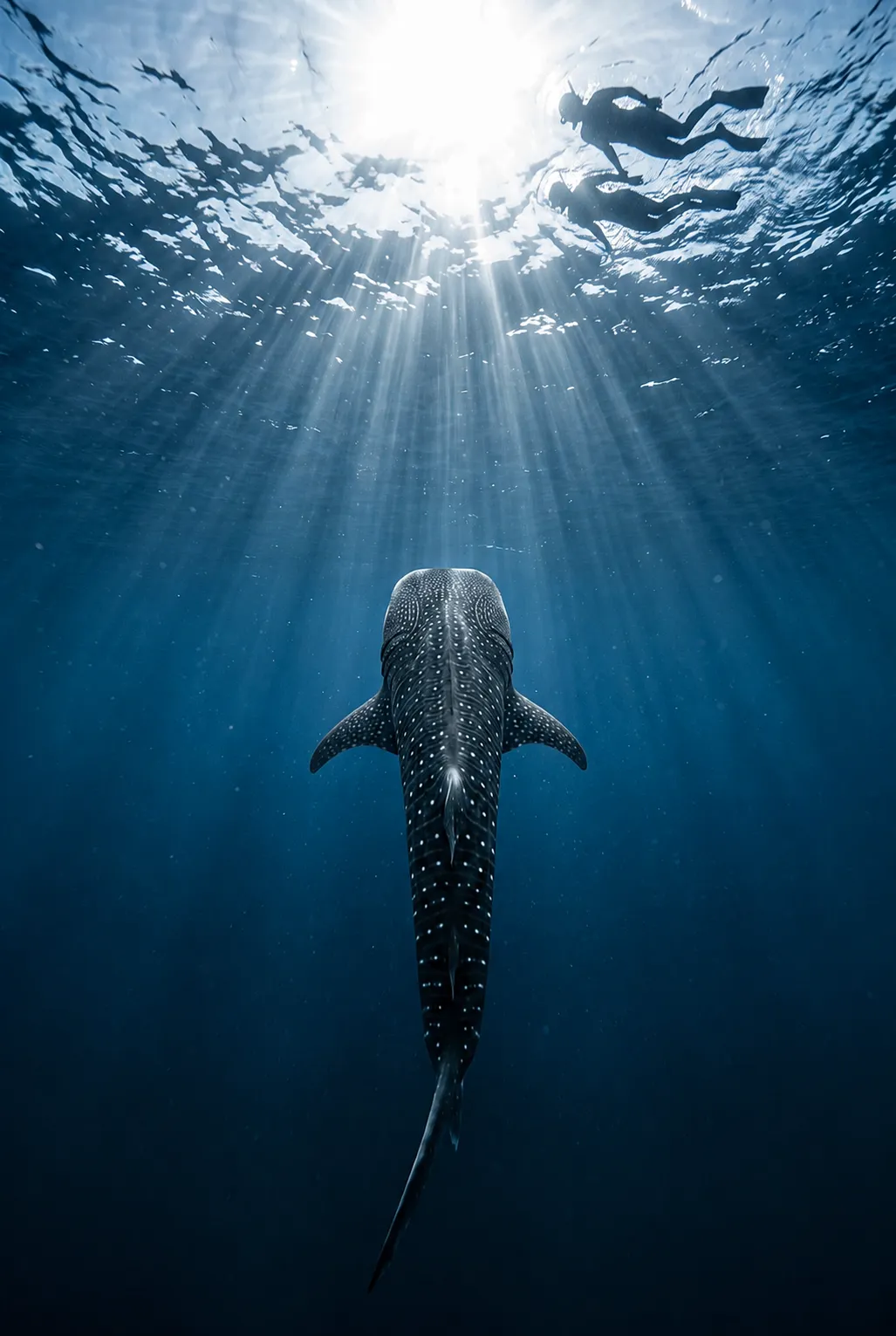
The Maldives holds one of the great natural spectacles on earth, and the market barely explains it. In Baa Atoll’s UNESCO Biosphere Reserve, at a bay called Hanifaru, the season’s plankton concentrates and the manta rays gather to feed in numbers seen almost nowhere else, at their peak in the middle months of the year, the season the binary calendar calls wrong. Access is regulated, rightly, snorkelling only, numbers managed, and the judgement is in the doing: the right island within reach, the right guide reading the day, and the honesty that wildlife keeps its own appointments. South of the capital, the atolls around South Ari hold whale sharks with remarkable reliability across the year, the gentlest giants in the ocean, swum with rather than watched. For the traveller who believes the Maldives is only a beach, these two are the country’s complete answer.
The one-key idea, and its extremes.
The logic of one island, one resort reaches its conclusion in islands designed around a handful of keys, or one. Private-island exclusivity here is not a suite category but the entire world made yours: Velaa Private Island is the country’s reference for it, a privately conceived island where the scale, the cellar and the discretion answer to a standard set by its owner rather than a brand book. This is where the celebration, the gathering and the retreat at the highest level belong.
The islands we stand behind.
Seven, each named for a reason and none ranked above another; the occasion does the ranking.
- Waldorf Astoria Maldives IthaafushiThe family flagship. Scale used intelligently: villas across water, beach and reef, dining in genuine depth, and a children’s world that anchors the annual rituals we design. A speedboat island, which is precisely why families love it.
- One&Only Reethi RahThe grande dame. A generation at the top and still the address for polish at scale; lagoon-side villa positions we ask for by number.
- Joali BeingThe wellness statement. The island built entirely around wellbeing, for the traveller who wants the week to change something.
- Velaa Private IslandThe private pinnacle, as above; celebrations and exclusive use.
- Soneva JaniThe water villa done properly: the largest overwater villas in the country, slides into the lagoon, barefoot theatre. The photograph everyone books, honoured in full.
- KudadooThe all-inclusive rehabilitated: everything simply part of the stay, at a scale of fifteen residences. The proof of the argument made earlier in this guide.
- Patina MaldivesThe design-led generation, for the traveller whose references are architectural; part of a development that also brings city-grade dining to the atolls.
Beyond the seven, the prose deserves four more: Finolhu for the playful end of the spectrum, the sandbank and the long lagoon; .Here for the newest expression of the private-island idea; Cheval Blanc Randheli for couples who want the maison’s polish in the seaplane belt; Soneva Secret for remoteness as the entire product, a handful of villas beyond even the seaplane belt’s habits. Each is a different answer to the same question, which is the point of this entire guide.
When to Go
The honest answer first: the Maldives is a year-round destination sold as a half-year one, and the calendar below is written to correct the fiction rather than repeat it. Two seasons shape the country, a drier northeast monsoon from roughly December to April and a greener southwest monsoon from May to November, and everything else is detail.
December to April: the season the market means.
The driest skies, the calmest lagoons, the longest waiting lists. Within it, the festive fortnight is its own economy: the country’s peak of peaks, when the finest villas are committed the better part of a year ahead and minimum stays lengthen. It is glorious, and it is the most expensive fortnight in the Indian Ocean; families bound to school holidays book it early or assemble it from what remains. The judgement inside the season is March and into April: festive pressure long released, the weather at its most reliable, the same islands at a gentler temperature in every sense. If the diary is free, that is where we point it.
May to November: the green season, honestly described.
Rain comes, and it comes mostly in showers that pass rather than days that cancel; the water stays bath-warm, the islands empty out, and the value is the best of the year. What it genuinely risks: more wind on the water, cloudier interludes, reef visibility that varies week to week. What it genuinely offers besides price: the country’s great gathering, for this is Hanifaru’s season, the mantas at their peak in the months the binary calendar writes off, and surf on the breaks that only wake in the green half. Travellers are sometimes taught to choose islands by monsoon side in these months; in our practice that precision promises more than it delivers, and the island’s own character matters far more than its compass bearing.
The compressions.
Beyond festive, the calendar’s real pressure points are the school holidays, Easter, October half-term, and, planned from the Gulf, the two Eid breaks, when the speedboat islands in particular fill with remarkable speed. It is the compression international guides never mention, and for our clients it is often the decisive one: Eid weeks are booked like festive, early or not at all.
The honest row.
Whichever month you choose, you are booking probabilities, not promises. The dry season carries the odd squall; the green season delivers flawless weeks; Hanifaru gathers when the plankton does, not when the boat arrives. We plan the journey so the weather can only bruise it, never break it. The ocean signs no contracts; the design is what holds.
Questions
- Seaplane or speedboat?
- Neither is superior; they serve different trips. Speedboat suits the shorter stay, small children and anyone protecting their first evening: aboard within the hour and on your island before the light goes. The seaplane suits the longer trip to the remote atolls, flies in daylight only, and is worth planning the flight times around. Decide it with the island, never after it.
- When is the best time to go to the Maldives?
- Any month, honestly, provided the expectation matches it. December to April brings the driest, calmest weather and the highest demand; March and April are the quiet judgement within it. May to November brings passing showers, the year’s best value, the surf season and the manta gatherings at Hanifaru Bay. There is no wrong month, only a wrong brief.
- Water villa or beach villa?
- For a week or less, choose one for the occasion: the water villa for theatre, the beach villa for ease. Beyond a week, take both; the water-then-beach combination is the standing recommendation for long stays, and the mid-stay move becomes part of the holiday.
- Which islands are best for families?
- The islands whose children’s provision is structural rather than promised: clubs with genuine programmes, age bands your children actually fall inside, babysitting for the late dinner, kitchens that handle dietary needs properly. Waldorf Astoria Maldives Ithaafushi is the reference in this guide, a speedboat island, which for families is itself a feature.
- Is all-inclusive worth it in the Maldives?
- On the right island, emphatically. Drinks are expensive across every island in the country, and the standard of cooking at the top level removes the old suspicion that inclusive means indifferent. On islands designed around it, Kudadoo is the clearest example, the inclusive basis is not a compromise but the island’s whole idea.
- When can you see whale sharks and manta rays?
- Whale sharks hold near South Ari Atoll with remarkable reliability across the year. The manta gathering at Hanifaru Bay in Baa Atoll peaks in the middle months, roughly June to November, inside the season the market calls wrong. Both are wild appointments: the right island, the right guide and honest odds are what we arrange.
- How far ahead should we book festive dates?
- The better part of a year for the finest villas, and the same discipline applies to Easter, October half-term and, for travellers planning from the Gulf, the two Eid weeks, which fill like festive. Late booking rarely means no trip; it means the trip assembled from what remained.
- How does planning with Maison Emerald begin?
- With the occasion, not a villa category. The house works island-first: what the week is for, then the island that serves it, then the transfer, villa strategy and timing that follow. Through our network the rate arrives composed whole, transfers and recognition included, alongside the villa positions and arrival choreography no rate page carries.
Begin the Conversation
A hundred islands photograph identically. A handful will fit the week you are imagining, and one will fit it perfectly; the distance between those is judgement, and judgement is what we bring. The clients who return to these islands every year did not find theirs by scrolling. Begin a conversation, and we will start with the occasion, not the brochure.
The first journey, done properly, is the audition for a standing appointment.