
DESTINATION GUIDE · AFRICA
Safari
The wild keeps its own time. You are the one who adjusts.
Begin a conversationThe Editorial Introduction
A safari is not a species list with accommodation attached. It is a composed relationship between a traveller, a guide and a wild system that keeps no schedule. Maison Emerald plans safaris on one conviction: the guide matters more than the camp, the ground matters more than the map, and composition matters more than endurance.
The market has reduced the most profound journey in travel to five animals and one river crossing. The result is a version of safari assembled backwards: a famous lodge brand chosen from photographs, an itinerary bent around a migration date the animals never agreed to, three countries crossed in ten days, and a traveller who comes home saying it was wonderful while quietly wondering why it was not more. Nothing failed on that trip except the plan.
Here is the truth the brochures invert: Africa is the reliable part. The light comes every morning, the herds move as the rain tells them, the leopard does what leopards do, and none of it has ever once consulted an itinerary. What varies is everything human: the guide interpreting the land, the rules governing the ground you drive on, the season chosen for the system rather than the postcard, and the pace that decides whether the bush is met or merely photographed. Couples come for a proposal at sundown; families bring three generations to one fire. The wild receives them all on the same terms: its own.
And the honest surprise for most first-time travellers is how smooth the machinery is. The airlift from the Gulf and Europe is excellent, the light aircraft are a pleasure rather than a penalty, and the distances that look daunting on a map dissolve into short flights over extraordinary country. A safari does not reward hardiness. It rewards intelligent composition, and that is a craft.
The animals were never the variable.
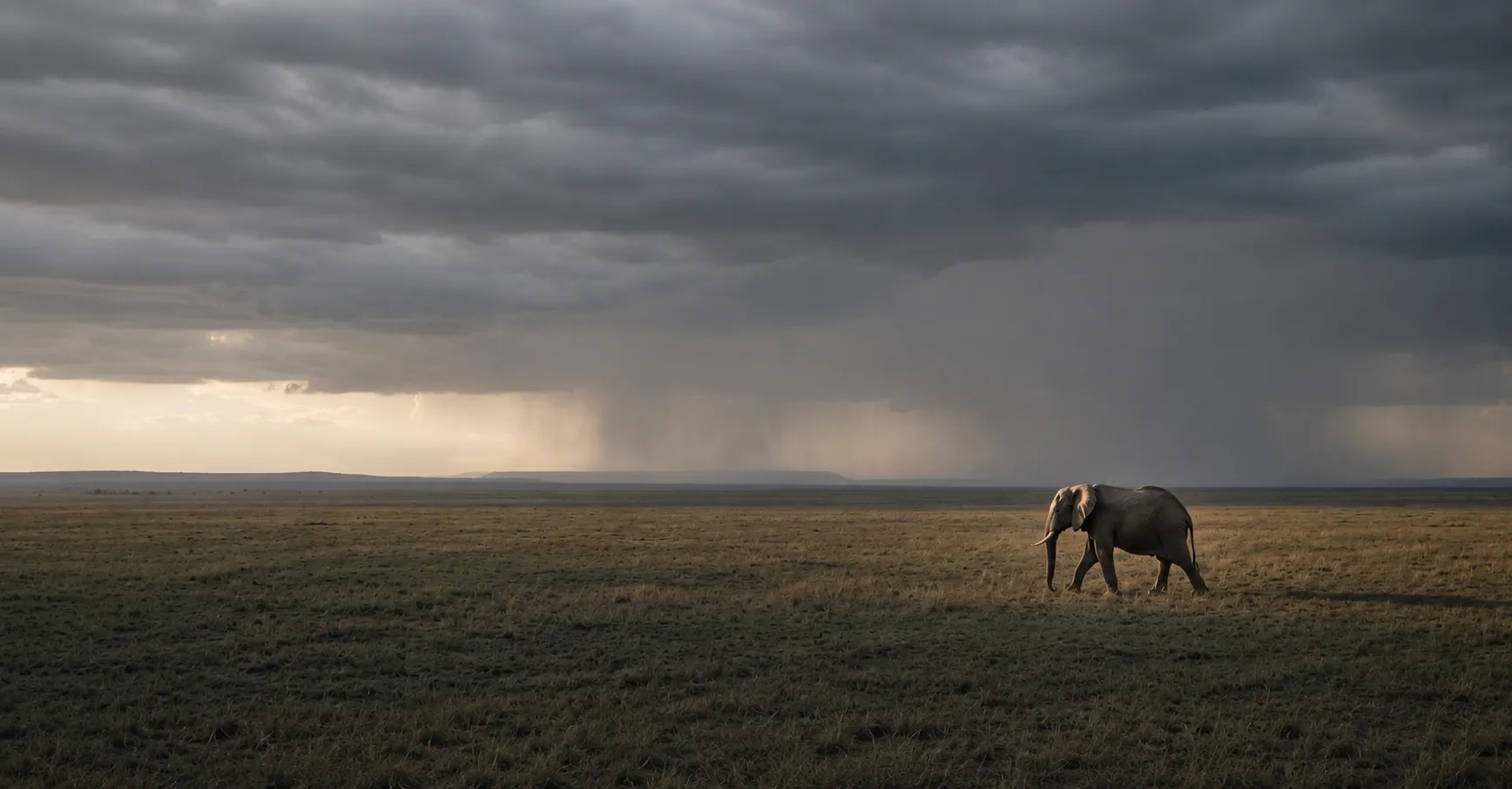
Africa never disappoints. It is the plans that do.
How Safari Goes Wrong
A safari is one of the easiest journeys in the world to book and one of the hardest to compose. The expensive mistakes are remarkably consistent, and every one of them is made months before the first game drive.
Choosing the brand instead of the guide.
The lodge photographs identically whether the guiding is exceptional or indifferent; the safari does not. A guide is the difference between driving past a thicket and understanding why the impala are staring into it, between a sighting and a story. Choose the famous name and hope, and the cost is invisible but total: the drives are pleasant, the animals appear, and the thing that changes people about Africa never quite arrives. The traveller leaves with photographs instead of a changed sense of the world, never knowing what the right guide would have shown them in the same place.
Building the journey around the migration alone.
The crossing is a probability governed by rain, not an event with a date. Herds move on grass and water, rivers rise on their own schedule, and no camp on earth can promise the afternoon the documentaries compress from months of footage. Build the whole journey on that one image and the cost is a week spent commuting between rumours while an entire wilderness went unmet, and a traveller who concludes safari “didn’t deliver” when the itinerary never gave it a chance.
Not knowing the ground rules.
National park, private game reserve, private conservancy: three legal arrangements that decide more about a safari day than the country does. They set how many vehicles may sit at a sighting, whether you may leave the road, walk, or drive after dark. The traveller who does not know the difference books the famous park and shares a leopard with fifteen vehicles on a fixed road, while the conservancy over the boundary held the same leopard for two. Same animal, same afternoon, two different journeys.
Fearing the wrong things.
Travellers agonise for weeks over malaria, a managed and well-understood reality with practical mitigation and, in parts of Southern Africa, entirely malaria-free alternatives, then choose a five-hour road transfer “to be safe” over the forty-minute light aircraft that would have saved the day. The precaution lands in exactly the wrong place. The health question deserves facts, context and a conversation with a travel-health professional; the transfer question was never a safety question at all, and the road pays its fare in fatigue.
Trying to do every safari at once.
Three countries in ten days buys airstrips instead of Africa. Each move costs a morning, each new camp resets the rhythm the last one built, and no ground is given time to work. The cost is the cruellest one: the first safari that should have created a lifetime of return instead exhausts the appetite in a fortnight of transit.
Understanding Safari
A sophisticated traveller does not need a country list. They need the structure of the decision: how the safari world is actually organised, what the ground rules mean, and why the journey in is easier than the map suggests.
The Shape of the Safari World.
Safari Africa is best understood as two great systems rather than a dozen countries. East Africa is the theatre of the open plain: vast grasslands, the year-round circle of the migration, and a rising conservancy movement around the famous parks. Southern Africa is the theatre of water and bush: the flooded channels of the Okavango, the dense private reserves of South Africa, and the continent’s most polished lodge culture. The two systems reward different instincts and, usefully, run on different clocks; their seasons overlap only partly, which is why the honest answer to “when should we go on safari” is almost always “where should we go then”.
The Two Systems.
East Africa.
Kenya and Tanzania: the Africa of the imagination, horizon-wide and herd-driven. The great parks carry the names; increasingly, the finest days are had on the private conservancies beside them, where communities and camps share the land and the vehicle density is a fraction of the famous circuits. This is the system of scale: the migration’s circle, the crossings, the plains that make every other landscape feel enclosed.
Southern Africa.
Botswana and South Africa: the Africa of intimacy and depth. Botswana’s delta is a water wilderness explored by boat, mokoro and light aircraft, deliberately low-volume by national policy. South Africa’s private reserves offer the most reliable close-range big-game viewing on the continent, a guiding culture with few equals, and, in its malaria-free regions, the natural answer for families with young children. This is the system of texture: the leopard at ten metres, the night drive, the walk.
Beyond the Two Systems.
Zambia.
The walking safari in its purest form, guiding as a heritage craft.
Zimbabwe.
A guiding qualification culture with few equals, and the Falls as a natural join between systems.
Namibia.
The desert’s altogether different register, landscape first and wildlife as punctuation.
Rwanda and Uganda.
The gorillas, which are not a safari at all but a pilgrimage, permit-governed and unlike anything else the continent offers.
The Ground Rules.
Three arrangements govern almost every piece of safari ground, and they shape the day more than geography does. National parks are public land: the great names, open access, and rules that generally keep vehicles on roads and inside daylight hours. Private game reserves are private land, often sharing unfenced boundaries with the parks: traversing is limited to the reserve’s own camps, which is what allows off-road driving, night drives and controlled sightings.
Private conservancies, the model East Africa has made its own, are partnerships between communities or landowners and a small number of camps: low vehicle density, walking, and tourism revenue flowing to the people who keep the land wild. None of the three is “best”. They are different instruments, and knowing which one your journey sits on is the beginning of judgement.
Getting There.
The journey in is the pleasant surprise. From the Gulf, nonstop and one-stop services reach Nairobi and Johannesburg in overnight ease, with Kilimanjaro and the regional gateways a short connection beyond; European connectivity is equally strong.
From the gateways, the light-aircraft network is the safari world’s bloodstream: scheduled hops of twenty minutes to an hour, flown low over extraordinary country, delivering travellers to airstrips minutes from camp. Helicopters earn their place where they transform the day, lifting over the delta’s channels or an escarpment no road serves. Private aviation slots naturally into the gateway cities and select regional strips. The one discipline the network asks in return is packing: soft bags and modest weights, briefed long before departure so the airstrip is a formality rather than a negotiation.
The Rhythm of the Day.
The safari day was the slow itinerary before the phrase existed. Dawn and dusk belong to the animals: out before first light, back as the heat rises; out again as the shadows lengthen, home under stars. Midday belongs to stillness, the pool, the deck, the siesta, the hide. Travellers who fight the rhythm spend their trip tired and their middays disappointed; travellers who surrender to it discover it is the holiday.
The Pace.
Nights per camp, not camps per trip. Three nights is the working minimum for any camp to show you its ground; seven to ten nights is the natural arc of a first safari; and every move costs a morning. The itinerary with the most camps is almost always the one with the least Africa in it.
Who It’s For.
Safari carries nearly every occasion, provided the version matches the reason. The honeymoon runs private and unhurried, a sundowner engineered for two. The multi-generation gathering wants an exclusive-use camp or private house where the family owns the fire. The retirement celebration and the bucket-list journey want the crescendo built properly, gentle first, remote last. The photographic traveller wants the specialist guide, the right vehicle and the right light, and will trade comfort for angle. The returning traveller wants the walk, the water, the remoter systems.
Who does it not suit? The traveller who cannot surrender the schedule. The wild is not a zoo; it holds no guarantees and keeps no appointments, and the whole reward lies on the far side of accepting that.
THE MAISON PERSPECTIVE
How we think about safari
“The guide matters more than the camp.”
The camp decides how comfortably you sleep; the guide decides what Africa becomes. A great guide reads a drag mark across the road and turns the morning into a hunt for the story; an indifferent one drives the loop. This is the judgement the market’s marketing cannot copy, because guiding quality does not photograph.
Get it wrong and everything downstream degrades invisibly: the sightings still happen, the understanding never does, and the traveller leaves without knowing what they missed. Get it right and an ordinary Tuesday afternoon becomes the story a family tells for a decade. It is why the house asks about guides before it asks about suites, and why our longest-standing relationships in Africa are with the camps where the guiding culture is the product.
“The ground rules matter more than the map.”
Travellers choose countries; they should choose ground. Park, reserve or conservancy decides your vehicle’s freedom, your sighting’s crowd, your evening’s reach and your feet’s permission, and the same leopard is a different experience under each set of rules. The consequence of ignoring this is bought at full price: the traveller who insisted on the famous name queues on a fixed road and is home by dark, while the conservancy next door gave two vehicles the night drive and the walk. The name on the map cost them the journey they thought they were buying.
“The migration is a system, not an appointment.”
Around two million animals move through a year-round circle, and the river crossing is one violent afternoon inside it. Position within the system, the calving grounds in their season, the herds’ line of travel, the rivers when the pressure builds, and the drama finds you in one form or another. Chase the single image with a fixed date and you commute between rumours, paying peak rates to be disappointed on schedule. The traveller who understands the circle is never let down by it; the traveller who booked the poster sometimes is.
“The light aircraft is the luxury, not the compromise.”
Families “save” with the long road transfer and deliver tired children to camp after dark, losing the first drive and half the next morning to recovery; the forty-minute flight would have landed them at the airstrip with the whole afternoon intact. But the flight is not merely faster. From a thousand feet the land explains itself, the channels and drainage lines and herd trails drawing the map no road ever shows, and the journey between camps becomes part of the safari rather than a pause in it. On the ground you meet the wild; from the air you understand it.
“One region, done properly, creates the second safari.”
The everything-trip produces a completed checklist and no reason to return; it mistakes coverage for depth and spends its magic on airstrips. The single-system journey produces something better: a traveller who now knows the difference between the delta and the plains, who has learned how they like to meet the wild, and who books the other system next year with appetite instead of fatigue. The finest compliment a first safari can earn is not “we saw everything”. It is “when can we go back”.
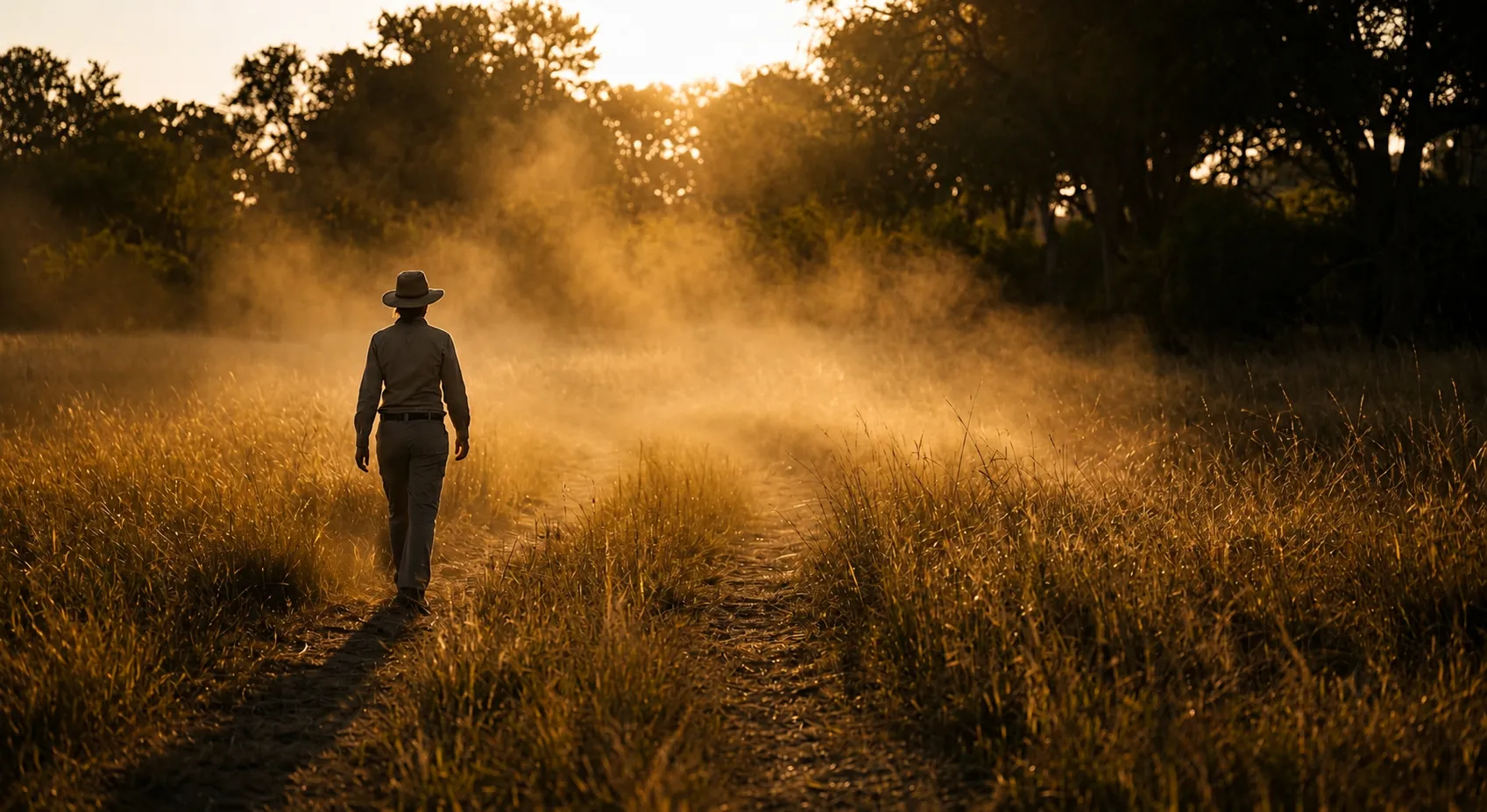
Choosing Experiences
A safari is not chosen from a lodge brochure. It is chosen through four decisions, and the first one, where you stay, is really a decision about whose hands the journey is in.
Where You Stay.
The styles frame the choice before any name does. The owner-operated camp is where guiding culture lives: families and founders on their own ground, staff who stay for decades, and a standard set by pride rather than policy. The conservation-led lodge makes the land itself the product, with the stay funding the science and the protection that keep the wilderness worth crossing the world for.
The international brand camp trades some of that intimacy for consistency and polish at scale, and at its best does both. The exclusive-use villa or private house is the answer for the multi-generation gathering and the private group: your own guide, your own vehicle, your own fire, and a family that never has to share the sundowner.
Within those styles, houses the house stands behind, each named for what it proves. Singita is the brand done right at conservation scale: a name that spans two systems while behaving like an owner on every piece of ground it protects. Londolozi is the South African owner-operated original, one family’s land for generations, where the guiding culture is the institution and the leopards of the Sabi Sand are its living archive.
Royal Malewane makes qualifications the product: some of the most decorated guiding credentials on the continent, which is precisely the judgement most travellers never think to ask about. Tswalu is conservation and science as hospitality, the Kalahari at private scale, malaria-free ground that makes it the natural first answer for families with young children.
In Botswana, the delta’s finest water camps, of the calibre of Great Plains and Wilderness, prove the low-volume doctrine: fewer beds on more land, the mokoro and the helicopter doing what roads cannot. In East Africa, the owner-run conservancy camps of the Mara and the migration-system camps of the Serengeti carry the same argument in plains form: ground rules first, name second. And for the family or group that wants the wild on entirely private terms, the exclusive-use houses across both systems, some never advertised, are the quiet top of the market.
The house’s relationships across this list, and across Sub-Saharan Africa more broadly, run to owner-operators, family-run lodges, conservation initiatives and the specialist operators behind them; recommendations are the house’s own judgement, and access and recognition are relationship-led, property-specific and arranged, never assumed.
How You Move.
The light-aircraft network is the bloodstream, and treating it as the luxury it is changes the whole design. Scheduled hops replace half-day drives; the packing discipline, soft bags, modest weights, briefed weeks ahead, is the one toll the network charges. Helicopters earn their seat where they transform rather than merely transport: over the delta’s channels, onto ground no strip serves.
Private vehicles are the house default wherever the ground rules allow, because a private vehicle is really a private schedule: the sighting held as long as the family wants it, the photographer’s light waited for, the tired child taken home without ending anyone else’s drive. The road transfer keeps its honest place, sometimes right, occasionally scenic, and rarely the comfort choice travellers assume it to be.
The Encounters.
Private guiding is the multiplier on everything else. A private guide who travels the whole journey with you turns three camps into one continuous education; a specialist photographic guide adds the vehicle, the angles and the patience the craft demands; specialist wildlife experiences, tracking on foot, time with researchers, the delta by water, take the journey below the surface of the game drive. The same sighting etiquette that protects the animal protects the experience: fewer vehicles, more time, engines off. It is the difference between collecting animals and meeting them.
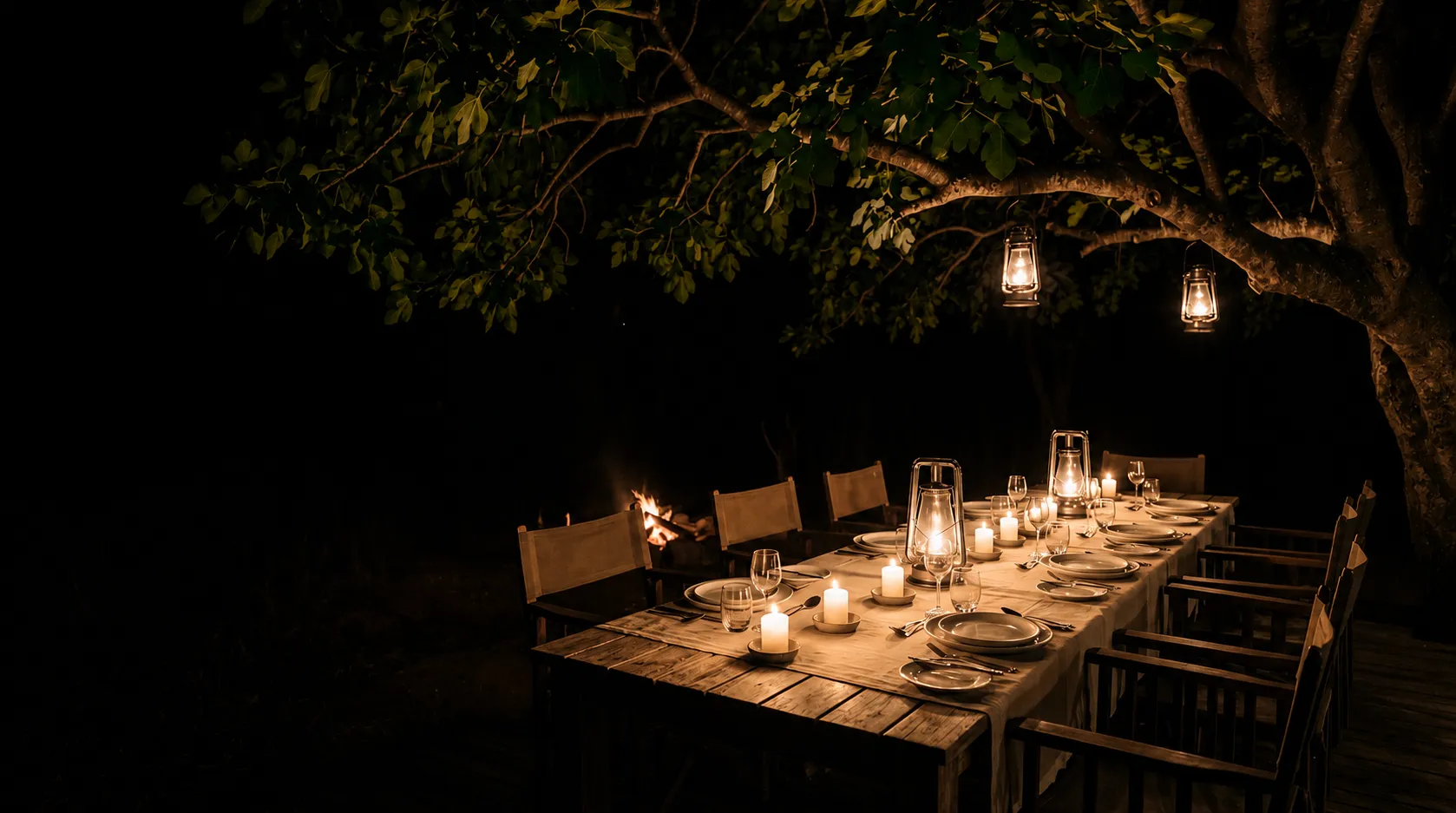
The Table.
No one crosses the world for safari cuisine, and the bush has the grace not to pretend otherwise. What it offers instead is theatre done quietly: breakfast where the drive ends, dinner under a fig tree, the fire as the dining room’s fourth wall. The sundowner is the institution, the day’s full stop, poured where the land is widest. The cooking at the finest camps is far better than it needs to be; the setting is what no restaurant on earth can plate.
Designing the Journey
Knowing what the safari world holds is the beginning. Composing a journey through a system that keeps no schedule is the larger craft, and it is the one the market skips.
Pace.
Three nights per camp as the working rule; seven to ten nights as the natural arc of a first safari. The arithmetic is unforgiving: every move costs a morning to pack and fly and settle, so a ten-night trip with five camps spends a third of itself in transit. Two camps, perhaps three, is almost always the right answer, and the contrast between them, plains and water, drive and walk, is worth more than a third name on the itinerary.
Sequence.
Gentler first, remoter last. The body needs a day to shed the flight and the mind needs two to shed the schedule, so the journey opens somewhere forgiving and builds outward, saving the wildest ground for the traveller who has learned how to be in it. That is the crescendo principle, and it is emotional engineering as much as logistics: the last camp is the one the family will remember as the trip, so it is chosen and positioned to deserve that. As with every journey the house builds, the composition starts with what the trip is for, the proposal, the milestone, the once-in-a-decade gathering, and works backwards; the map comes last.
Combinations.
Bush and beach is the classic exhale: a week of dawns earned, then the Indian Ocean doing nothing at all, and the coast is a short flight from either system. Cape Town is the civilised bookend on the southern route, a city worth real days rather than a stopover. What to resist is combining the two great systems in one journey; the plains and the delta each deserve a whole trip, they are better met in different years, and pairing them across time is precisely how one safari becomes a lifetime of them. The three-country sprint remains the composition error the whole page argues against.
Transfers.
Safari journeys break at the joins, so the joins are designed, not booked. Light-aircraft schedules run to their own daily rhythm, which fixes the shape of a moving day: the connection through the hub strip, the bags weighed the week before departure rather than argued at the airstrip, the road leg checked against the season’s condition, and the helicopter deployed where it buys back a half-day. The house’s standing rule is that a moving day is still a safari day, planned to end with the evening drive at the new camp rather than a headlight arrival, because the first sundowner on new ground is not a detail. It is the point.
Timing.
Two clocks govern every safari, and neither is the traveller’s. The day’s clock belongs to the animals: the design fills dawn and dusk, protects the midday stillness, and never books lunch against a lion. The year’s clock belongs to the rain: it moves the herds, fills the channels, greens the plains, and decides which camp is at its best in which month.
And behind both runs the booking clock, the one piece of scheduling the traveller does control: the finest camps in peak months and the gorilla permits are committed the better part of a year ahead, and the private-vehicle and specialist-guide arrangements are made when the journey is designed, not when it departs. The wild cannot be scheduled. The access to it must be.
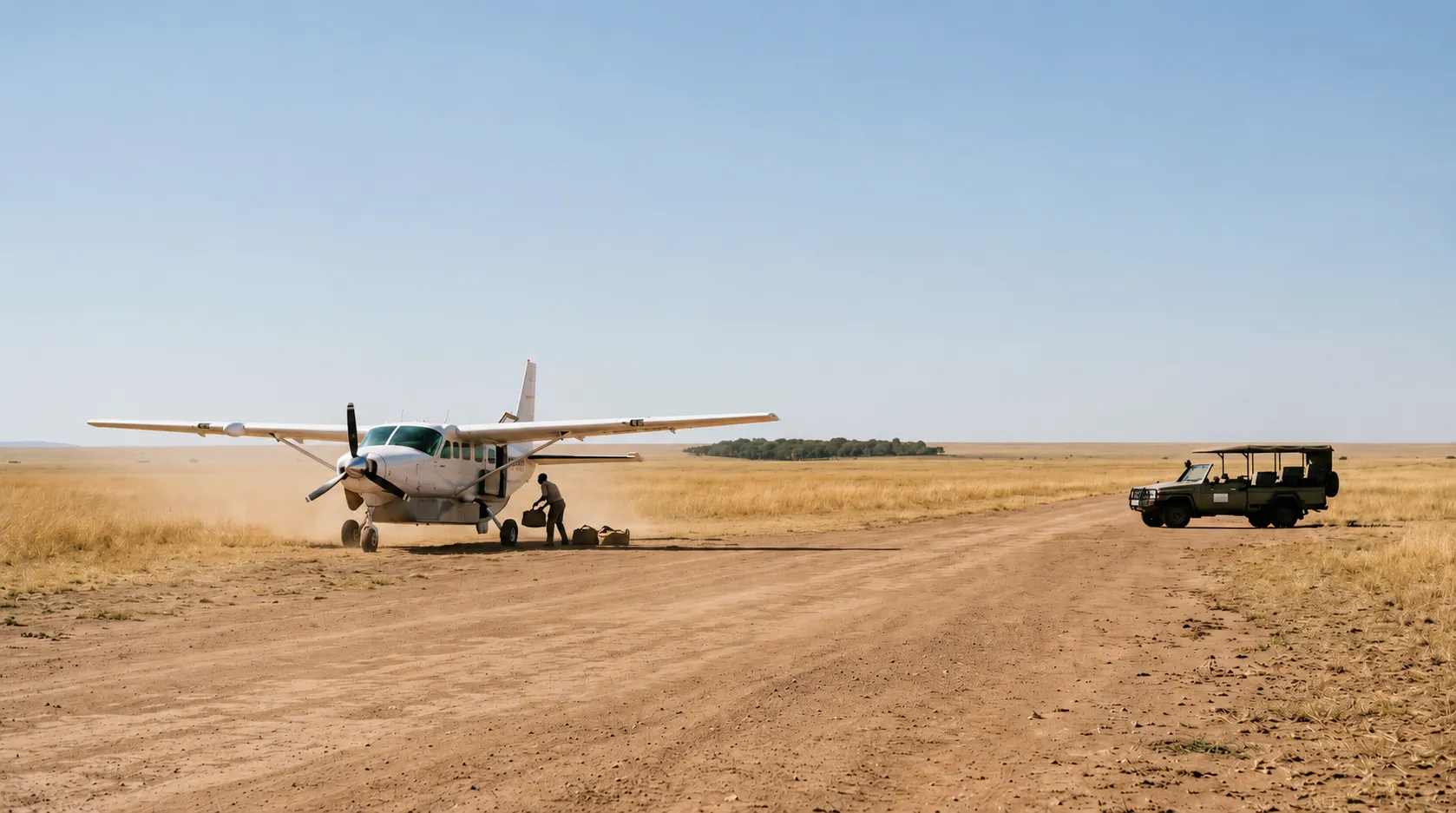
The wild sets the schedule; the craft is building a journey that can keep it.
Signature Experiences
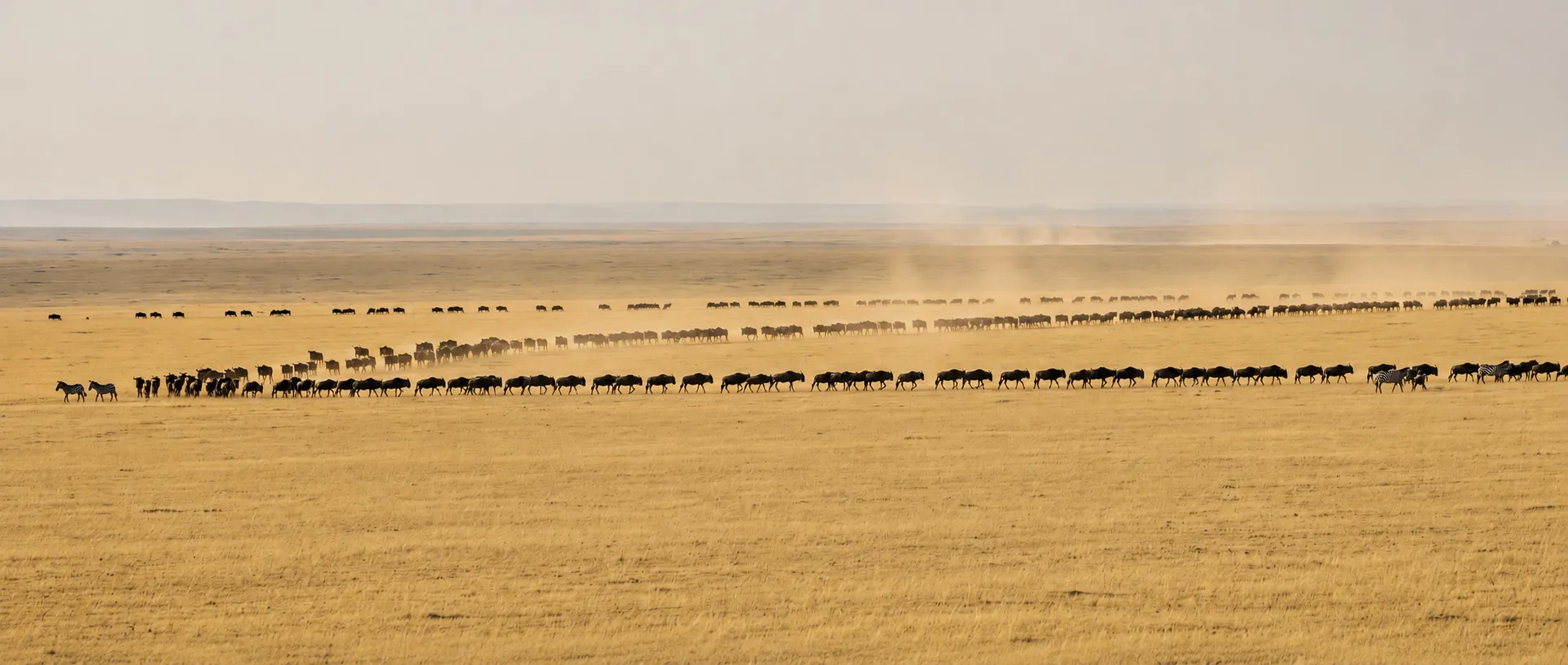
The migration, understood properly.
The greatest wildlife movement on earth is a year-round circle, not a fortnight at a river. The craft is positioning: the calving grounds when the plains are full of new life, the herds’ line of travel as the grass dries, the crossings when the pressure builds at the water. The green months belong to the calving grounds and the photographers; the dry months belong to the rivers and the queues; the judgement is knowing which of the two you are actually travelling for. Give the system a week and it delivers in one register or another; demand the poster on a date and the wild declines to be commissioned.
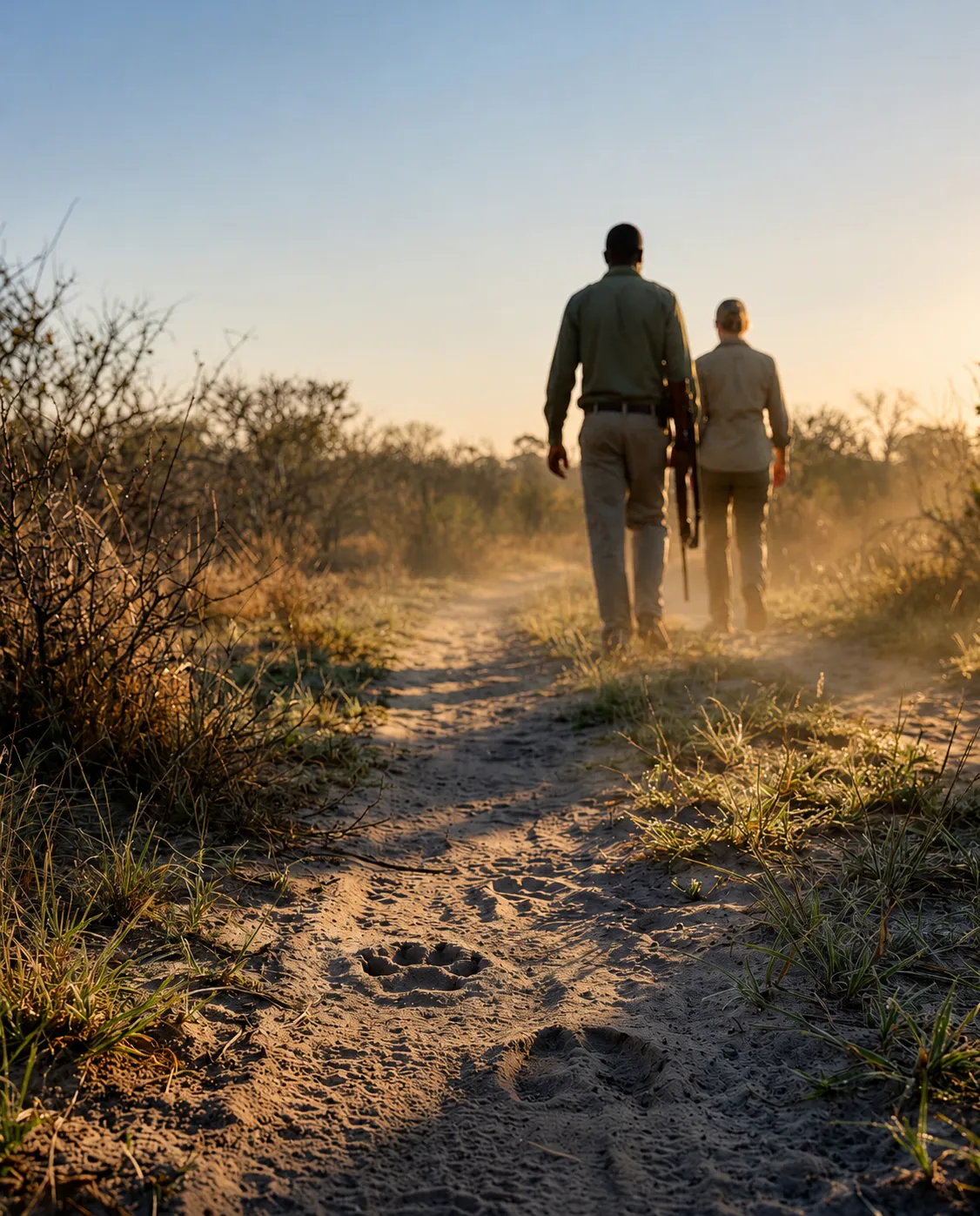
The walking safari.
The bush at boot height is a different continent: the tracks, the dung, the alarm calls, the wind’s direction suddenly mattering. Born in Zambia and perfected across the region, the walk is guiding as a heritage craft, and it converts a game-viewer into a participant. Judgement is everything here, the guide’s and the traveller’s; it is the returning safari-goer’s rite, and the moment first-timers realise there will be a second trip.
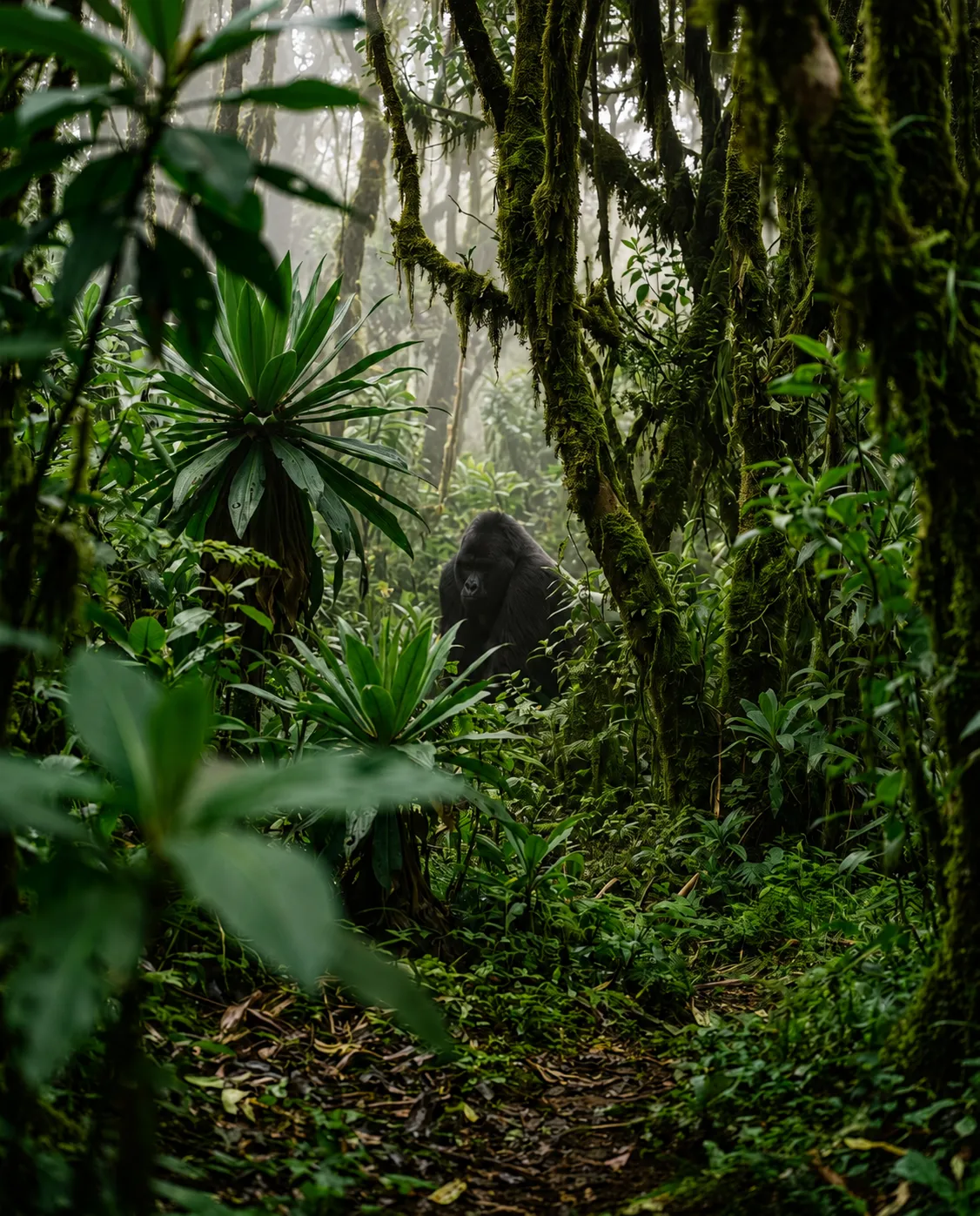
The gorillas.
Not a safari but a pilgrimage: a permit-governed hour with a family of mountain gorillas in the high forest, earned by a hike and gone in what feels like minutes. Permits are finite, allocated far ahead and non-negotiable at the trailhead, which is exactly why the hour retains its weight. It pairs with either system; it competes with neither.
The photographic safari.
For the traveller whose occasion is the image itself: a specialist photographic guide, a vehicle built for angles, and days scheduled around light rather than mealtimes. The difference between a good photograph and the photograph is rarely the camera; it is the guide who positioned the vehicle down-sun ten minutes before the cheetah moved.
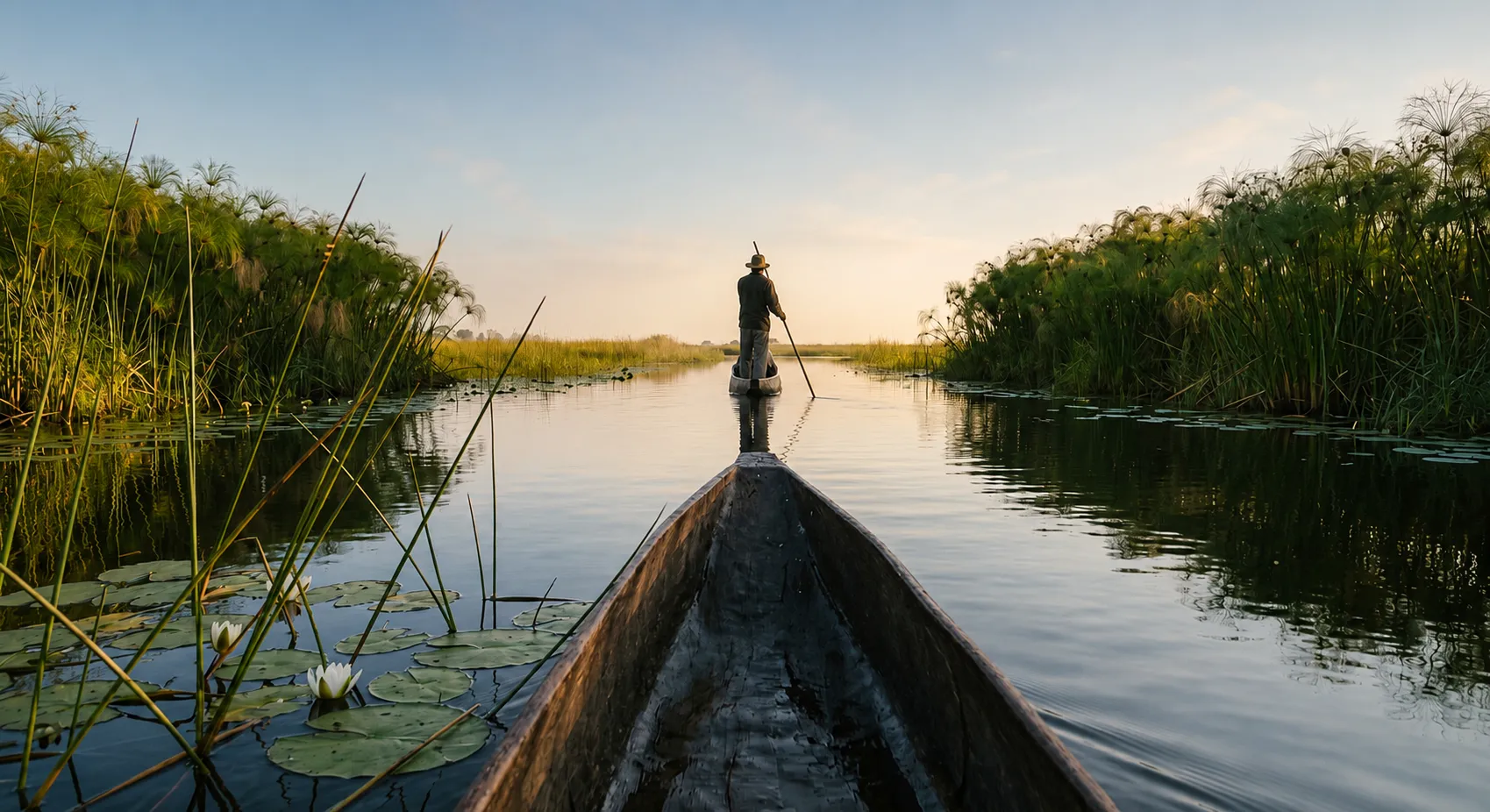
The delta by water.
The Okavango met on its own terms: the mokoro’s silence at lily height, the boat’s reach into the channels, the helicopter’s reveal of the whole flooded map at once. Water recalibrates everything, pace, sound, scale, and it is the strongest single argument for giving Botswana its own journey.
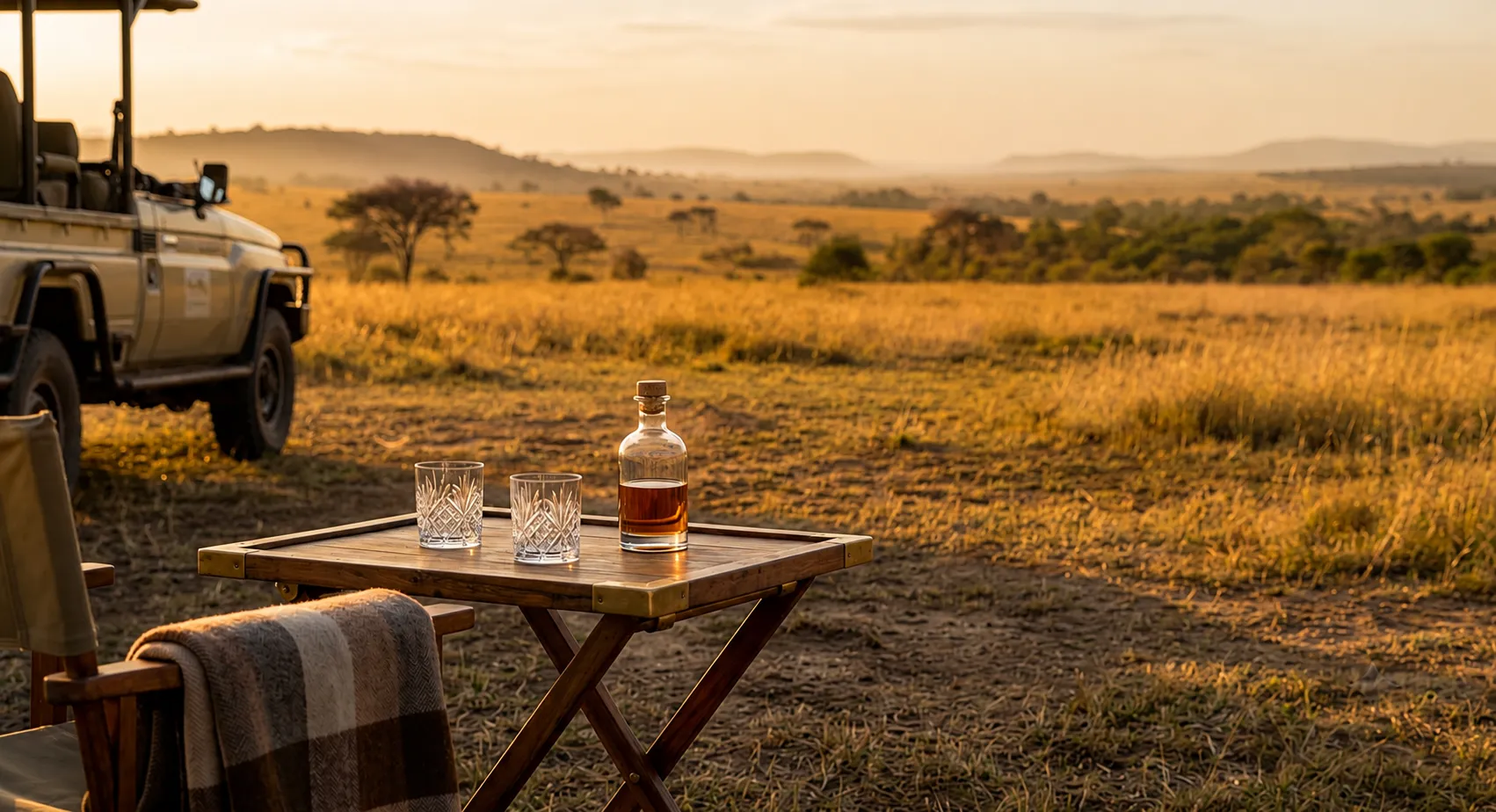
The sundowner.
The institution that explains why people return. The vehicle stops where the land is widest, the drinks come out as the light goes long, and for twenty minutes the day is simply held. No one has ever photographed it adequately, which is the point: it is the part of safari that only works in person, and it is the memory that books the second trip.
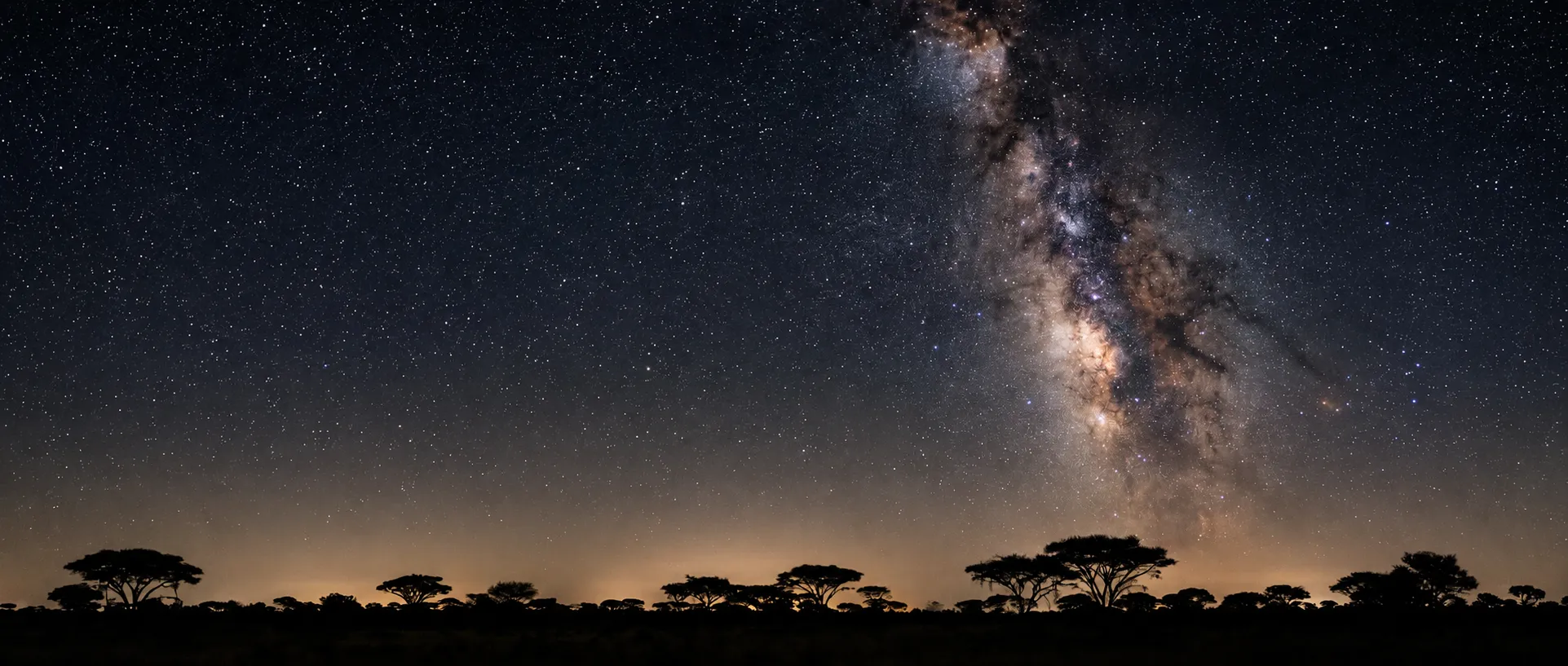
You do not watch the wild here. You are admitted to it.
When to Go
There is no safari off-season; there is only the honest match between the month, the system and the reason for the journey. The two great systems run on different clocks, which is the most useful fact in safari planning.
East Africa’s circle.
The migration’s year is a wheel, not a window. The southern plains fill with calving herds in the green early months, predators in attendance and the light extraordinary; the long rains then close some camps and empty others, honestly stated as the quiet gamble they are; the dry months draw the herds north towards the rivers, and with them the crossings, the crowds and the season’s peak prices; the short rains return the plains to green and the camps to calm. First-timers wanting the Africa of the imagination choose the wheel’s dry spokes; photographers and returners take the green ones. Every spoke of the wheel is a real safari; only one of them is on the posters.
Southern Africa’s arc.
The dry winter months concentrate everything: water scarce, bush thin, animals gathered at the rivers and channels, viewing at its most reliable, and the delta’s flood, on its own countdown from far-away rains, at its navigable height. The green summer is the connoisseur’s window: storm light, newborn animals, the birds arrived in their thousands, camps at their emptiest and the bush at its most beautiful, traded against thicker vegetation and afternoon theatre from the sky. Families and first safaris take the reliable winter; the green summer belongs to those who have already fallen for the place.
The counter-seasonal truth.
Because the two systems peak apart, there is scarcely a month in the calendar without a great safari somewhere. The question “when should we go” is therefore almost always the wrong one; the house’s question is “when can you travel”, and the system is chosen to meet it. This is the single largest planning advantage a composed safari has over a booked one, and it is the reason the calendar, not the continent, should bend.
One honesty belongs under all of it: the wild signs no contracts. Rain arrives early or refuses to; the flood runs high or thin; the herds read the grass, not the brochure; the cats do as they please. None of this is a reason to hesitate. It is the reason to design with slack, to choose camps that are superb regardless of the week’s weather, and to treat the extraordinary sighting as a gift rather than a deliverable. The travellers who love safari most are the ones who let Africa behave like itself.
Questions
- Do we need a travel advisor for a safari?
- More than for almost any other journey, honestly. A city break forgives improvisation; a safari is a chain of interlocking commitments, camps, light aircraft, permits, ground rules, seasons, where each choice constrains the next and the finest pieces are gone months ahead. If the trip is a single well-known lodge on flexible dates, you may manage well alone. For everything else, the composition is the product.
- First safari: East Africa or Southern Africa?
- Both are right; they are right for different instincts. East Africa for scale, the open plains and the migration’s theatre; Southern Africa for intimacy, close-range viewing, the delta’s water and the malaria-free options that suit young families. The honest answer usually comes from the occasion and the month, not the map.
- How many nights do we need?
- Seven to ten as the natural arc, split across two or at most three camps, three nights per camp as the working rule. Shorter works; it simply meets less of Africa.
- When should we book?
- For the finest camps in peak months, gorilla permits, private guides and private vehicles: the better part of a year ahead. The wild cannot be scheduled, but access to it must be.
- Is safari right for children, a honeymoon, a group?
- All three, in different compositions. Families gravitate to malaria-free Southern Africa, family-capable camps and private vehicles; honeymoons to privacy, water and the sundowner built for two; groups and gatherings to exclusive-use camps and private houses where the fire is theirs alone. Camps set their own minimum ages, which the house maps against the family rather than the other way round.
- Should we worry about malaria?
- Understand it rather than fear it. Malaria is a managed, well-understood reality across much of safari Africa, with practical mitigation and, in parts of Southern Africa, superb entirely malaria-free alternatives. The house provides the facts, the context and the options; the medical conversation belongs with a travel-health professional; the decision belongs with you. What deserves more worry than it gets is fatigue, and that is solved by design, not medicine.
- Is the Great Migration worth planning around?
- The system, yes; the single televised moment, no. Position within the migration’s year-round circle and the drama finds you. Build the entire journey around a river crossing on a fixed date and you have booked a probability at peak prices.
- How much should we budget?
- Safari cost is driven by four things: the ground (private conservancies and reserves over public circuits), the guiding (private guides and vehicles are the multiplier), the season (peak months command the year’s prices), and the privacy of the arrangement (exclusive use sits at the top). The figure follows the composition; a conversation about the occasion settles it quickly.
- How does planning with Maison Emerald begin?
- With the reason for the journey, not a lodge list. The house designs backwards from the occasion, chooses the system and the season to fit it, and then holds the ground, the guides and the permits that make it real, most of a year ahead where the journey deserves it.
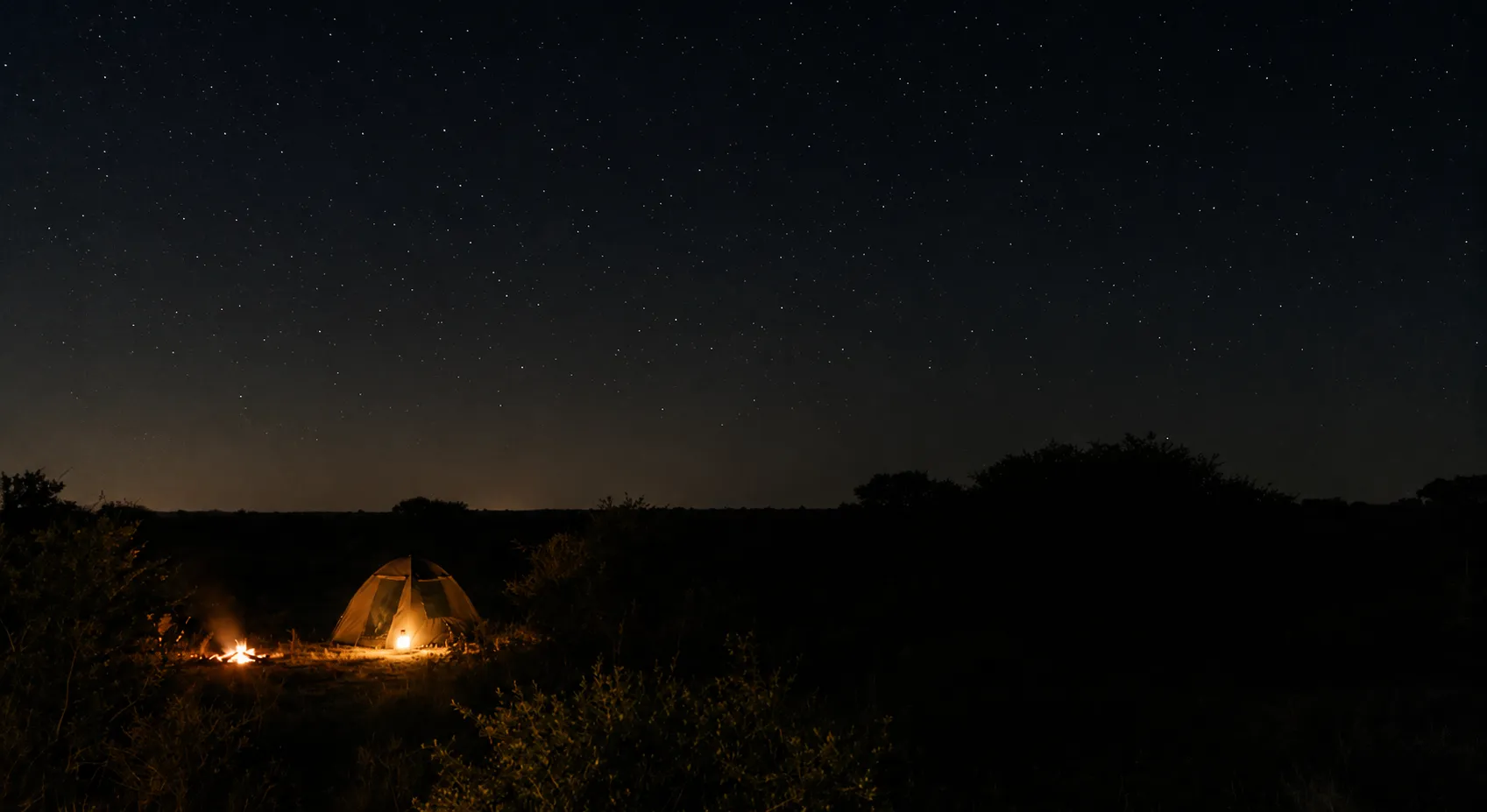
Begin with a conversation.
The finest camps, guides and permits are committed most of a year ahead. If a safari is forming, the conversation starts before the calendar does. Tell us who is travelling and what the occasion is; a destination is not required.
Africa is ready when you are. The plans are the only thing worth perfecting.